
THE PLEATED HOUSE
The well-established Mas Camarena residential development (Bétera), located northeast of Valencia, is home to this house called ‘La casa plisada’ (The Pleated House).
In it, the interplay of surfaces, volumes and sheets gives rise to a project where privacy and architectural harmony between constantly shifting planes take precedence.
Between the interlocking undulating overlapping surfaces, the open spaces unfold freely and fluidly, creating their own atmospheres and visually connecting the different levels. Through these connections, the richness of visual escapes is multiplied in skewed views between rooms, courtyards, terraces and gardens on different levels, forming a changing, dynamic and constantly moving interior landscape.
INDEPENDENT TOURS
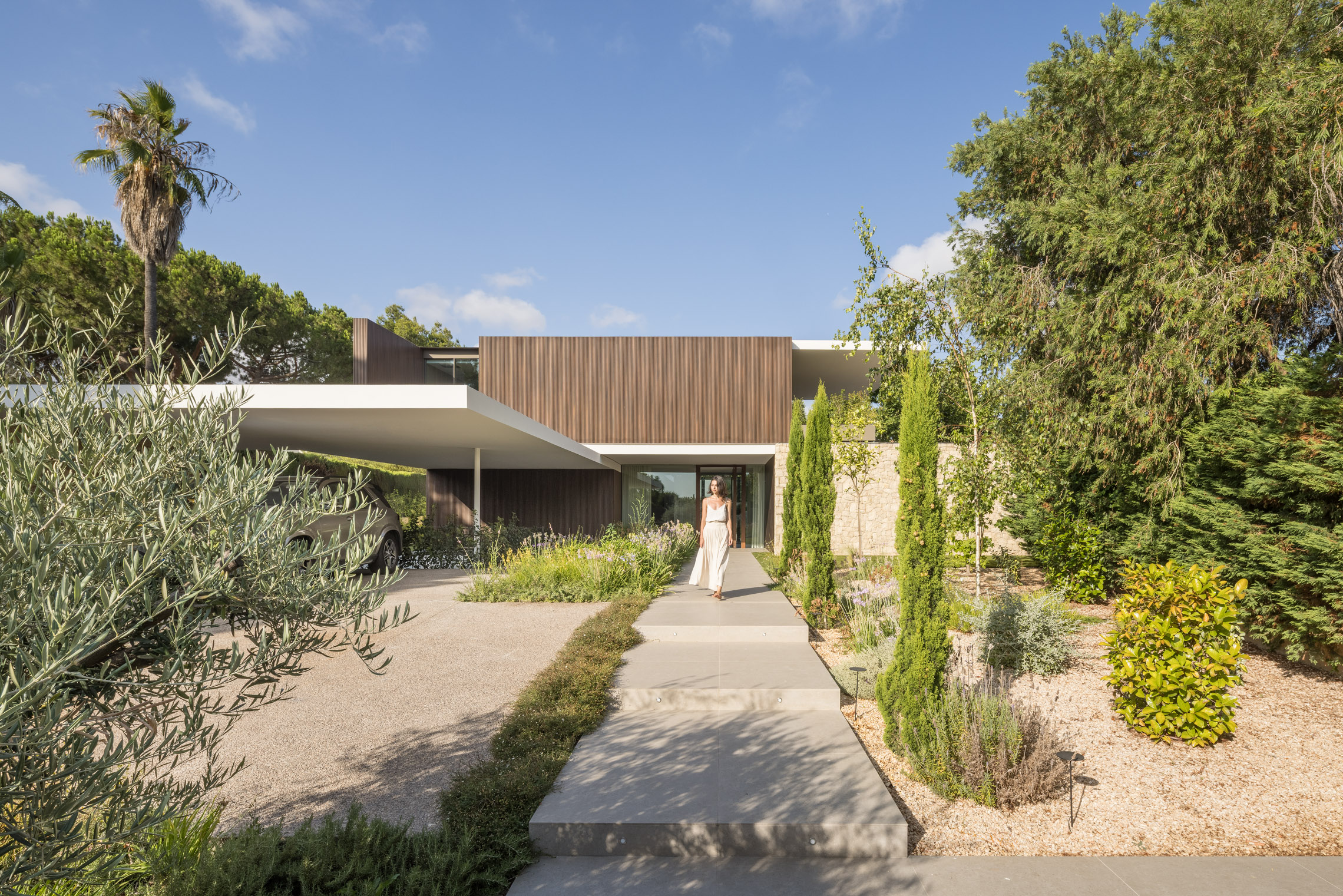
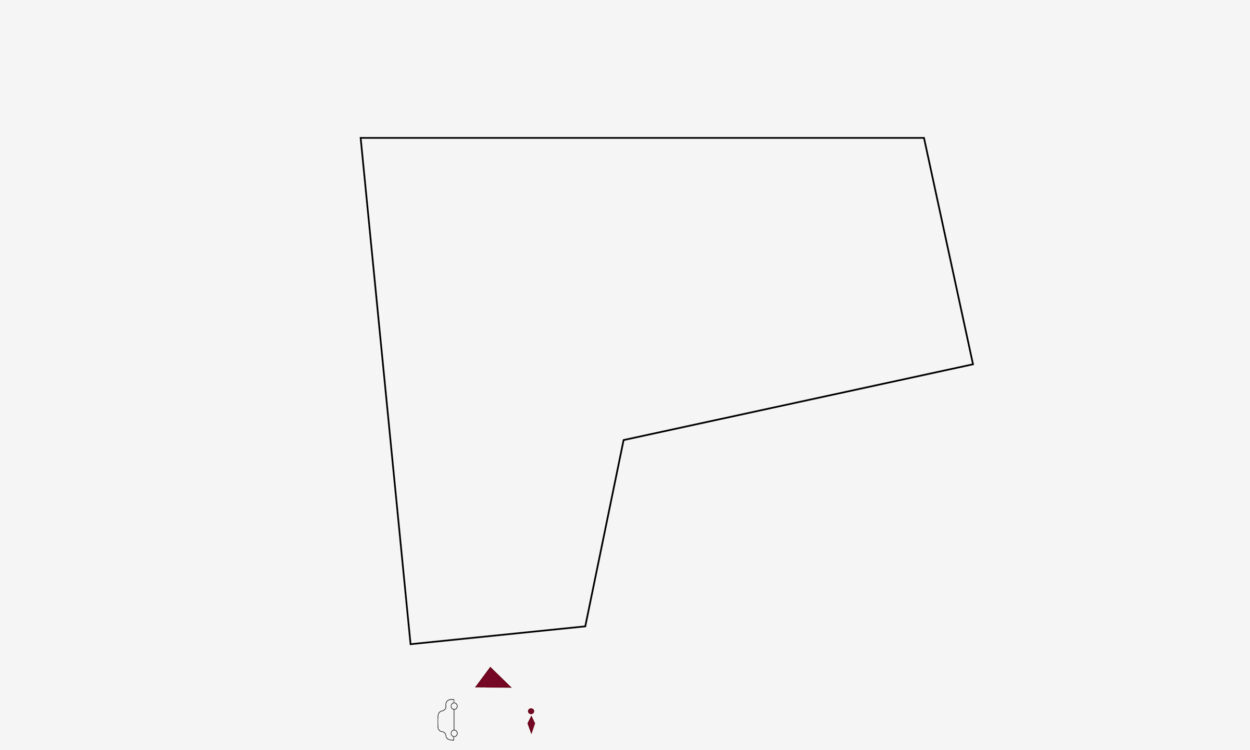
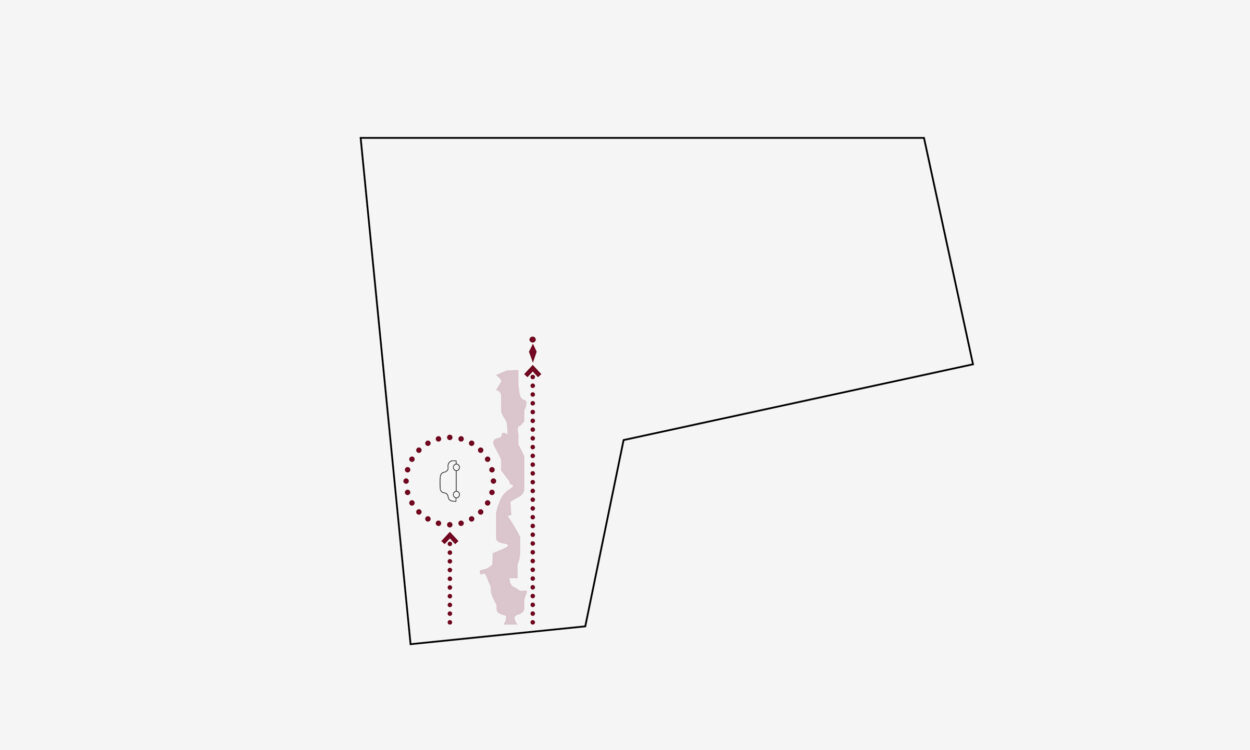
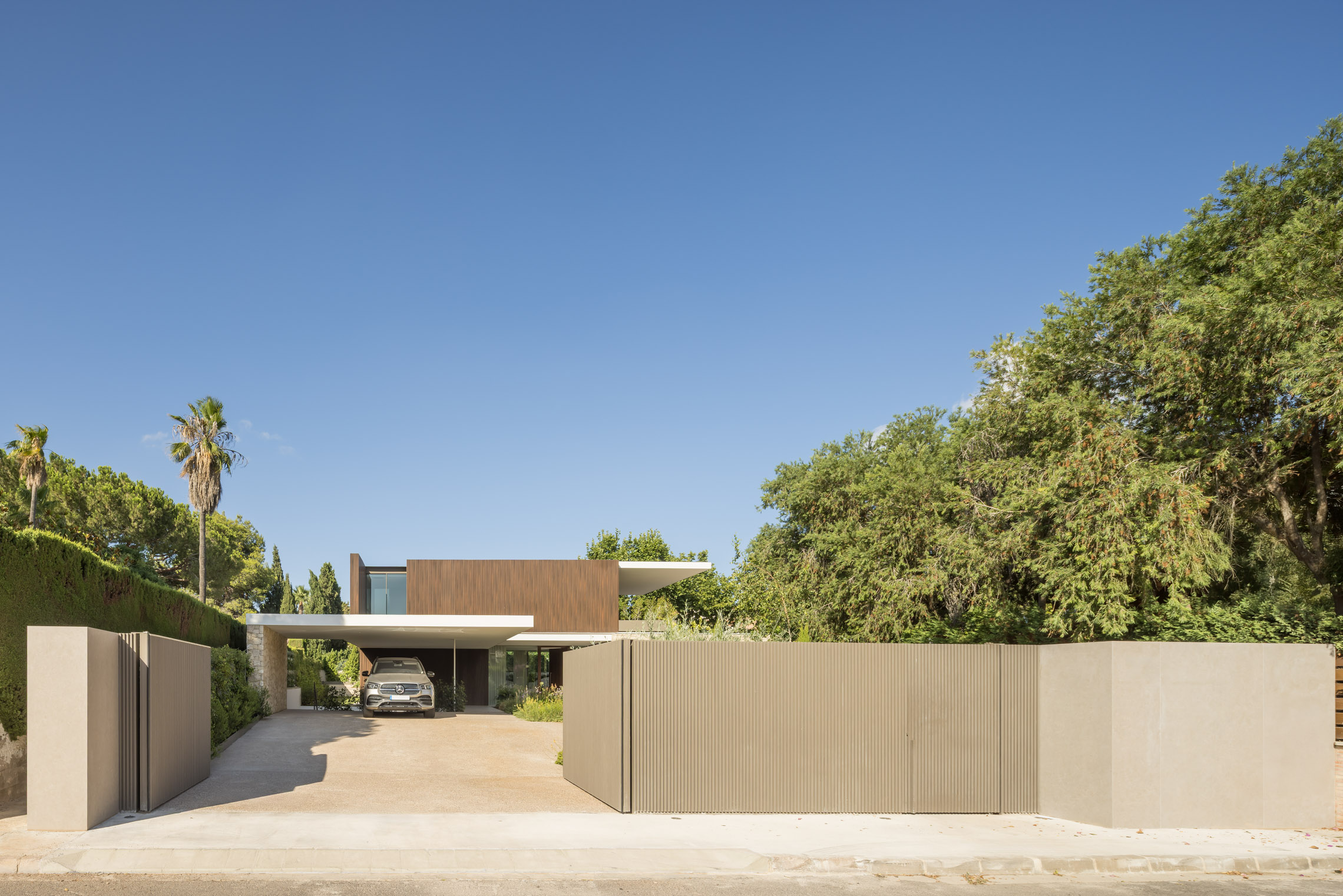
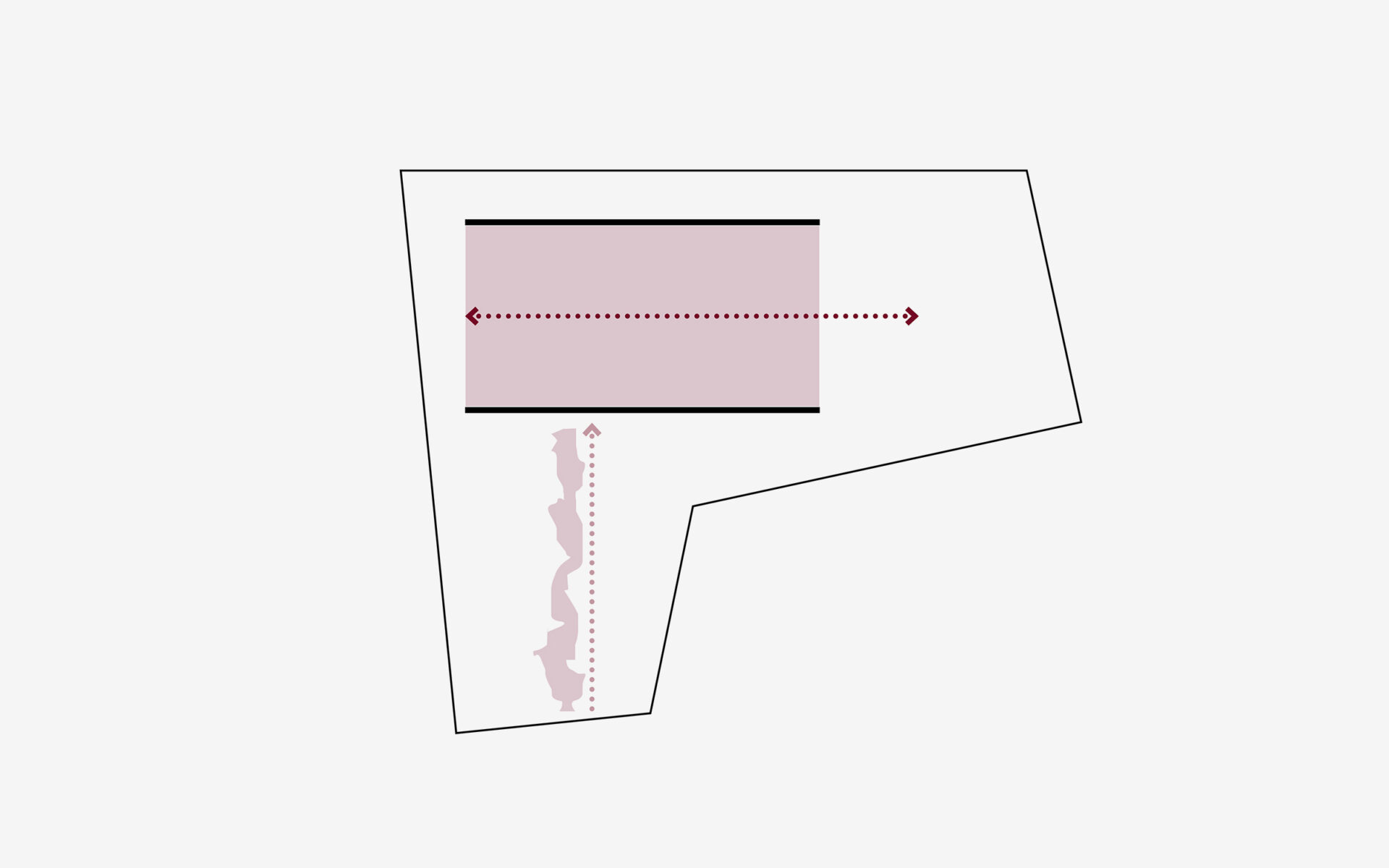
The house has a single access point from the street, so the aim is to develop two separate entrance routes, one for vehicular traffic and the other for pedestrians. Vegetation accompanies visitors as they approach the house along the east-west axis, preventing direct views between the two routes.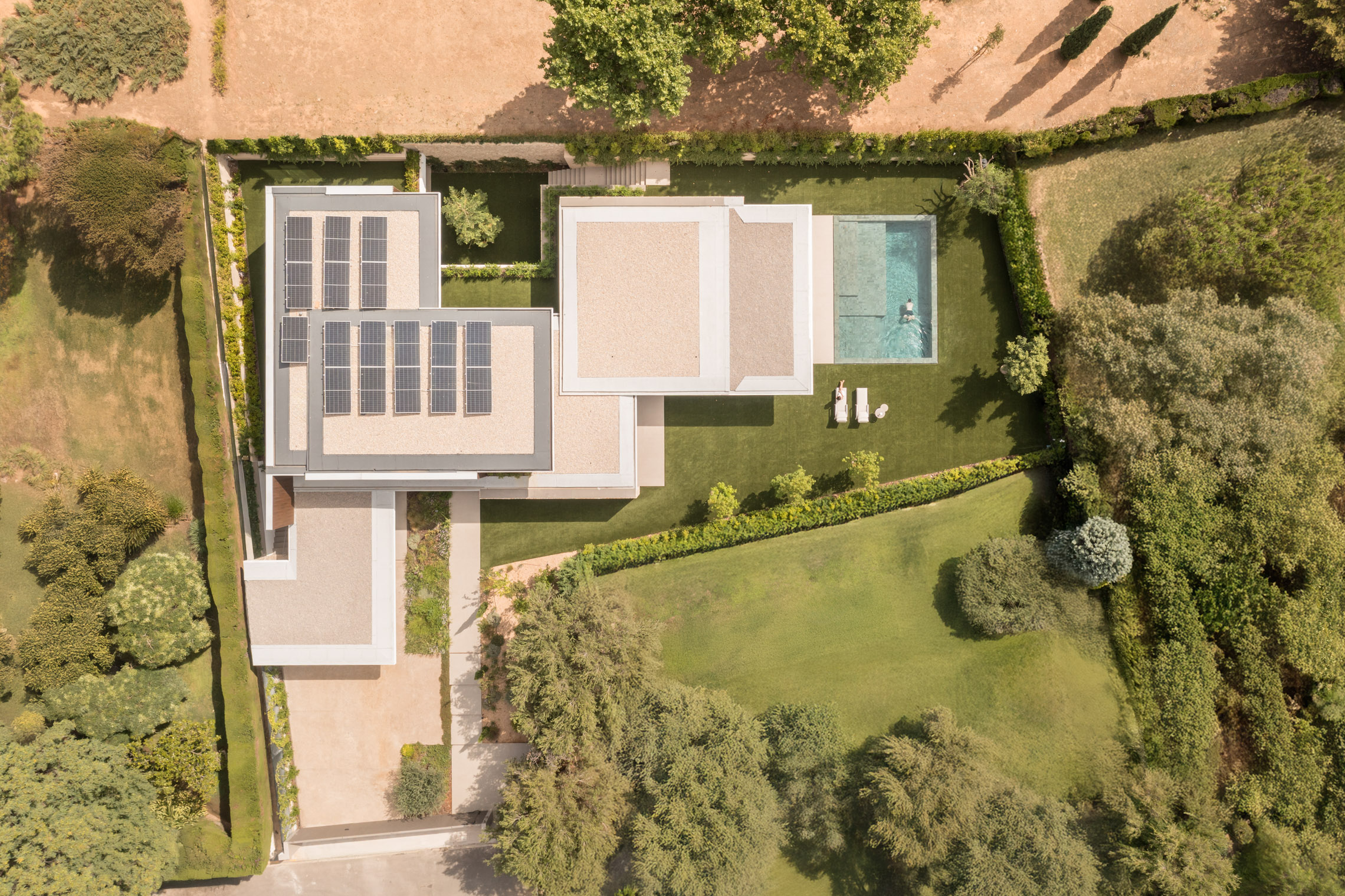
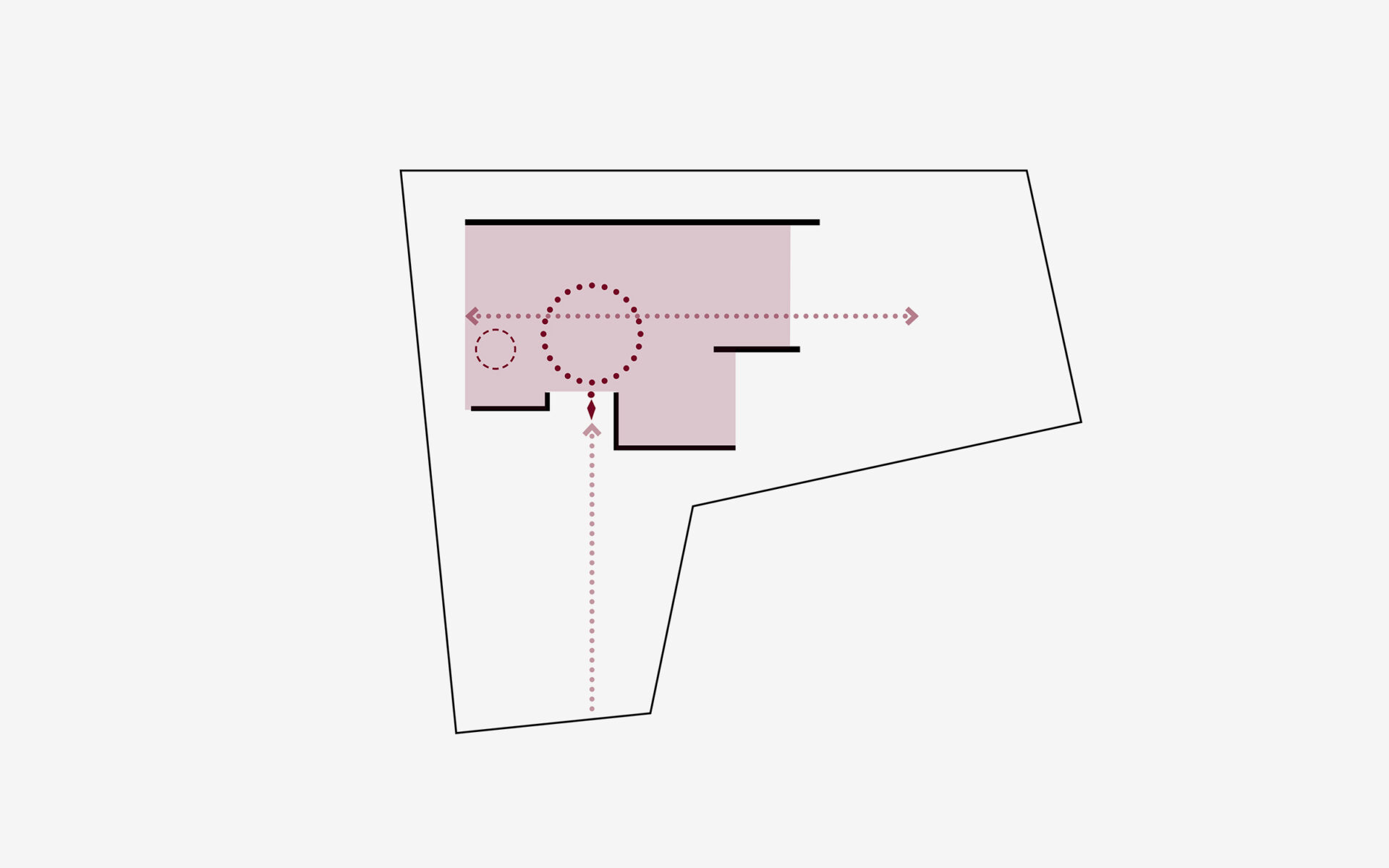
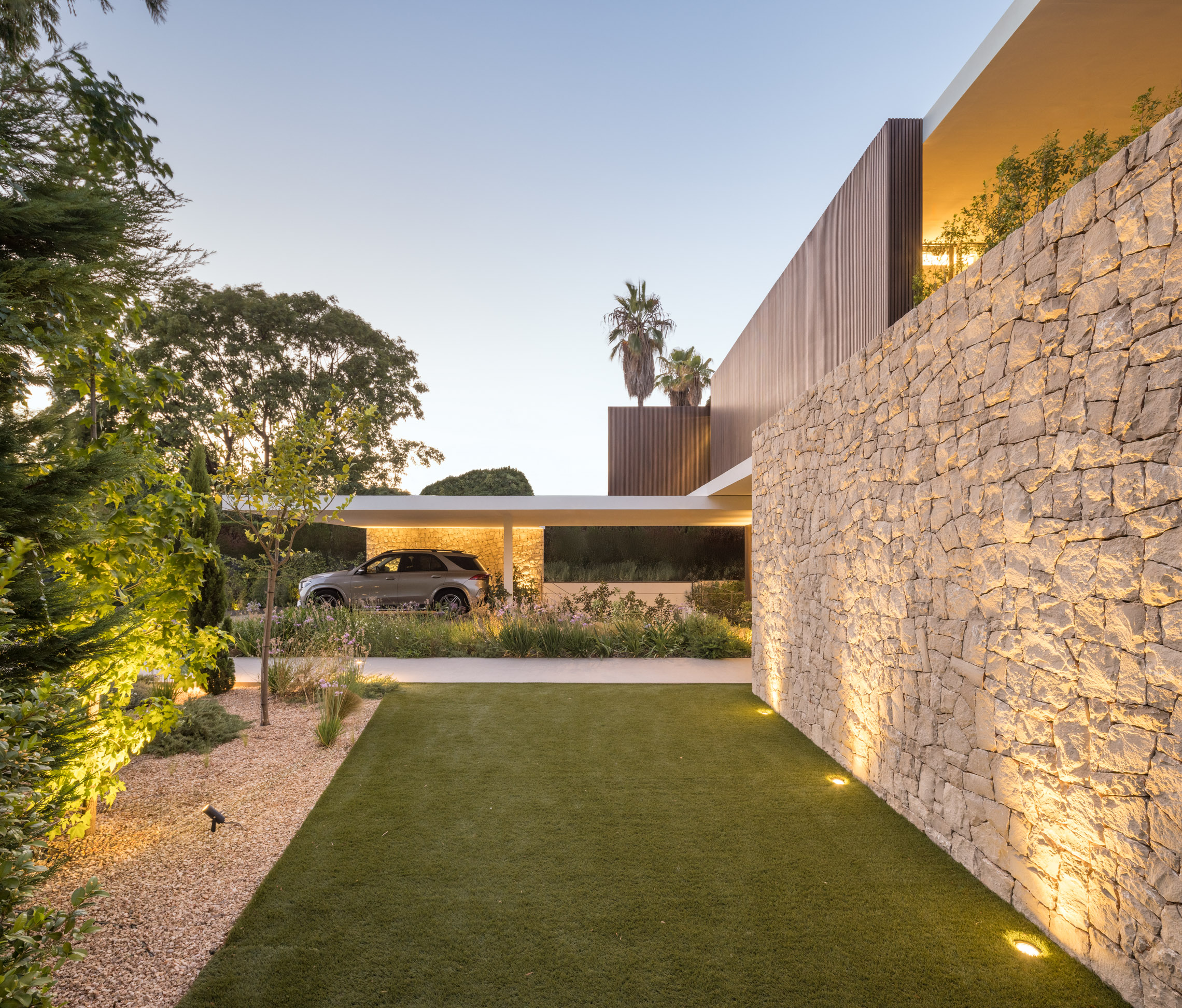
Taking advantage of the special geometric characteristics of the plot, the road for vehicular traffic only reaches an intermediate point where the covered parking area is located, freeing the rest of the plot from the presence of vehicles. The pedestrian route, on the other hand, continues to the centre of the plot, where the entrance hall is planned.
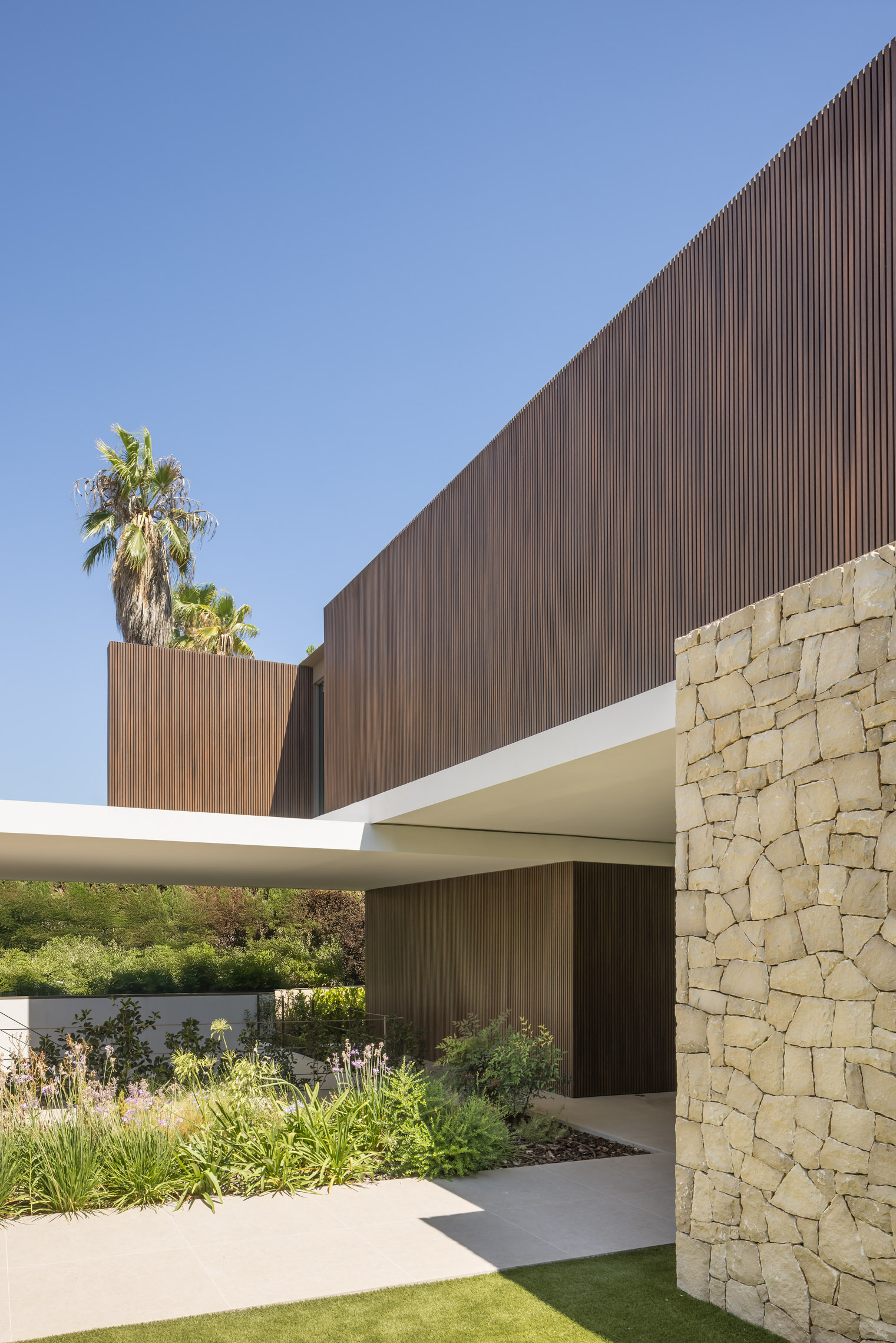
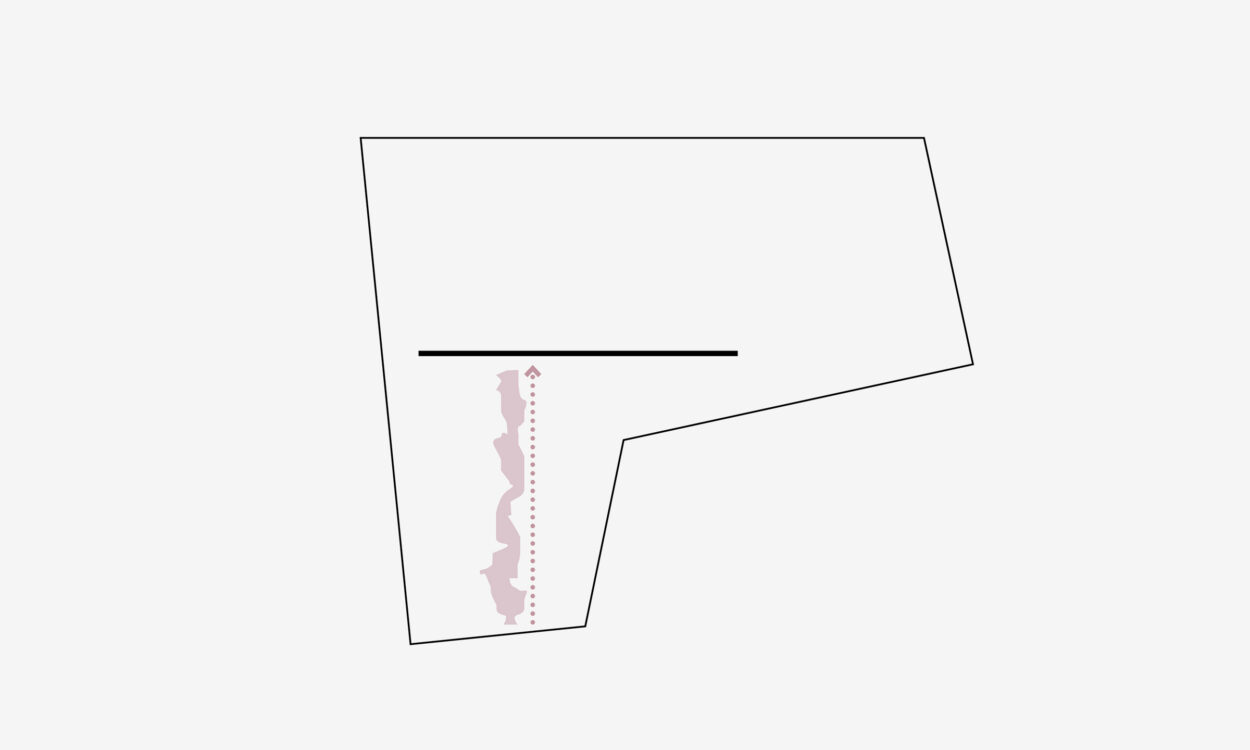
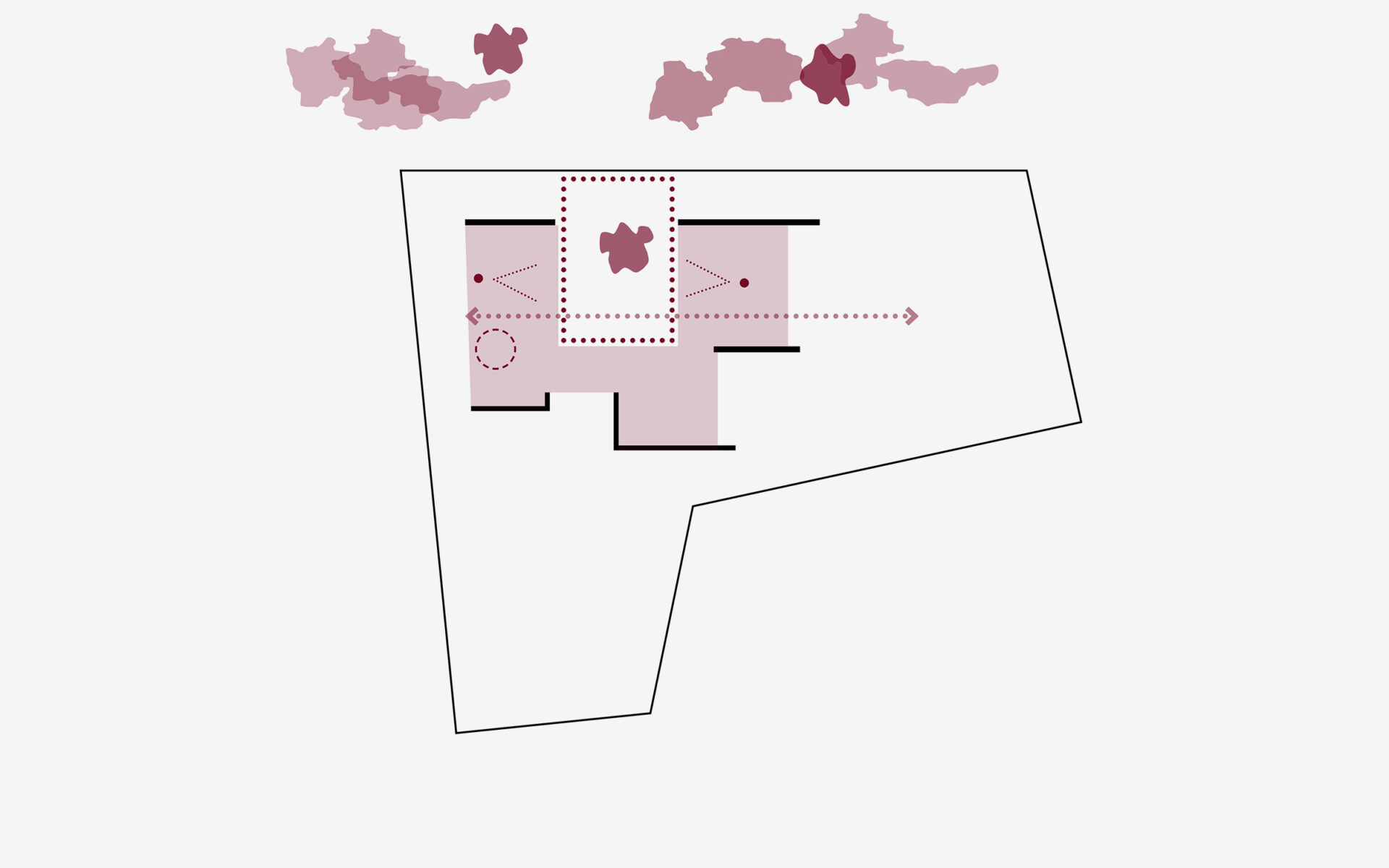
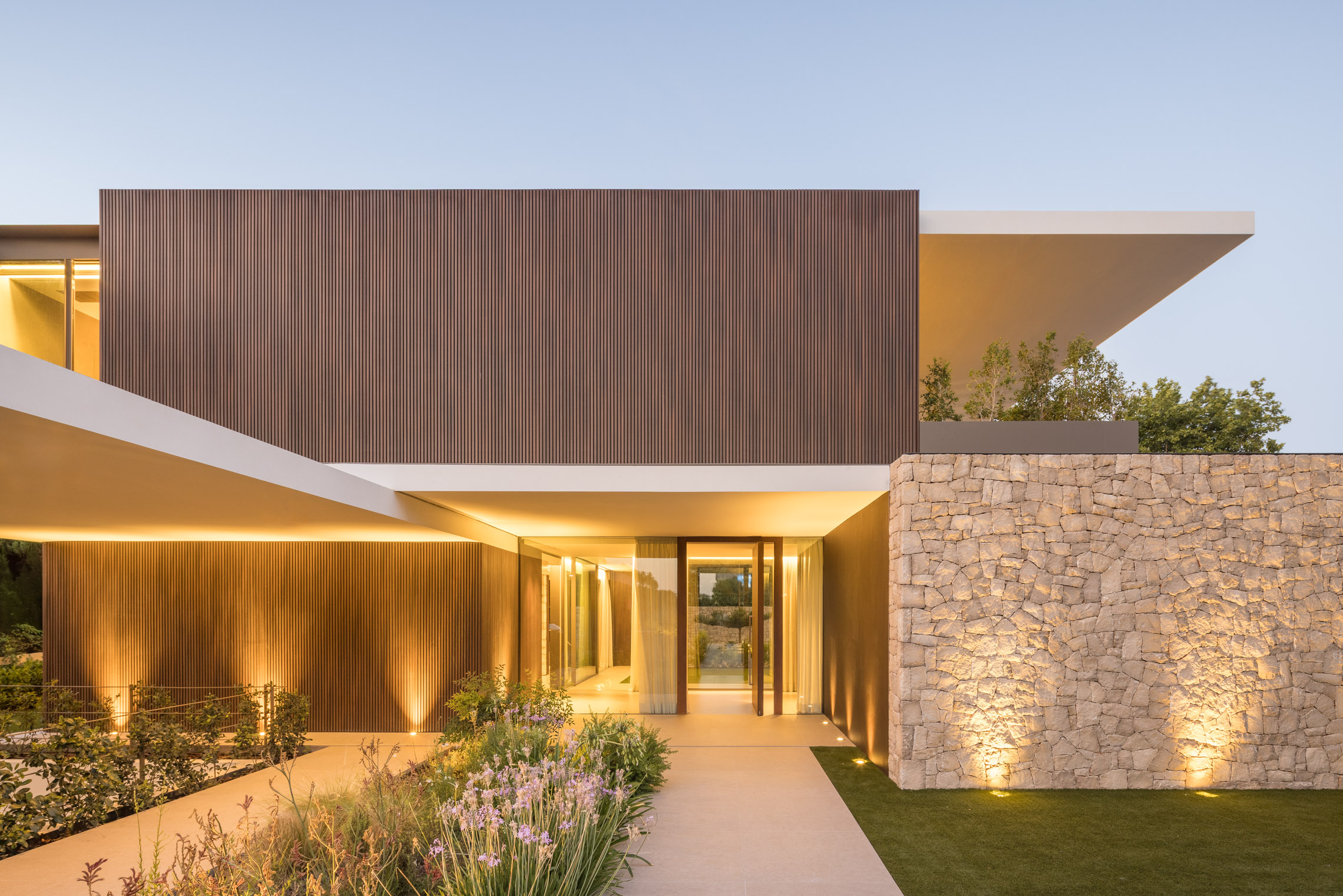
The pedestrian access route and the building structure converge transversally. At this point, the façade wall is fragmented to allow access to the interior spaces, creating the entrance hall: an open-plan space where all the interior routes of the house converge. The main feature in this central area of the house is the sculptural staircase that unfolds voluptuously across all levels of the house.
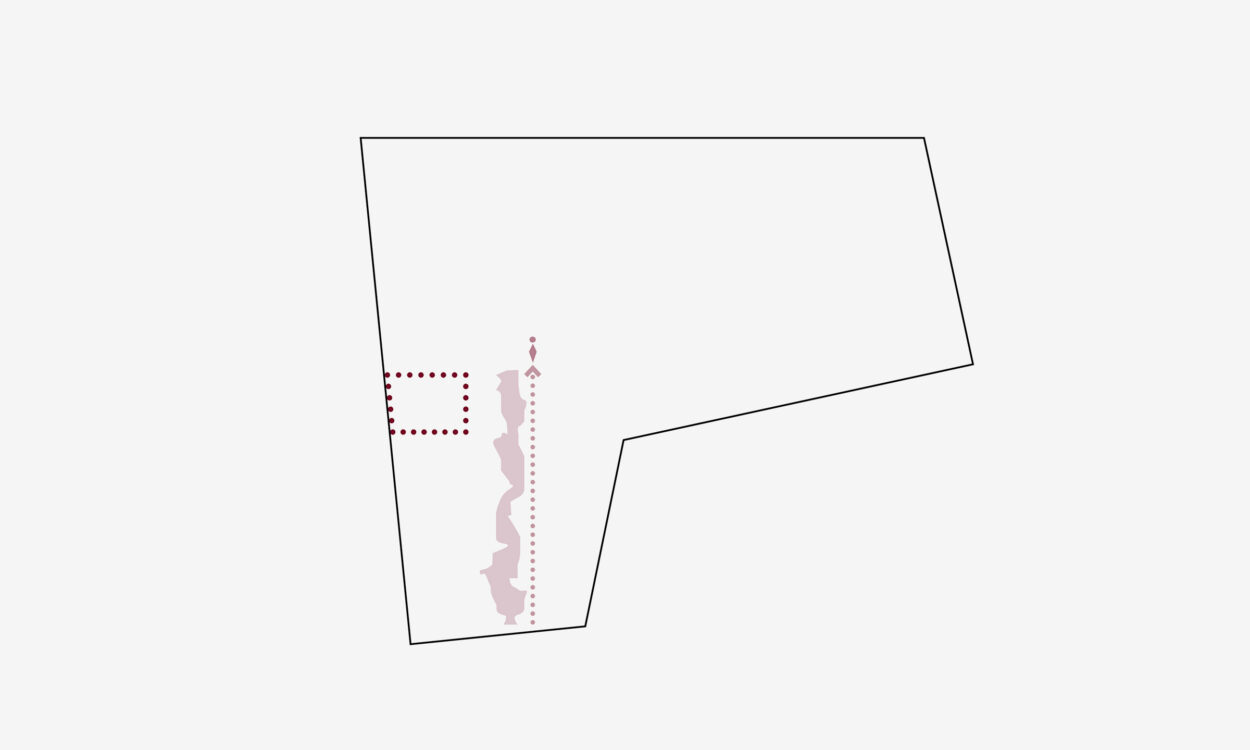
An open courtyard below ground level in the access area, next to the vehicle parking area, houses the space for installations, avoiding their visual impact on the garden area as a whole, thus making them accessible for necessary maintenance work.
THE SOLID FACADE
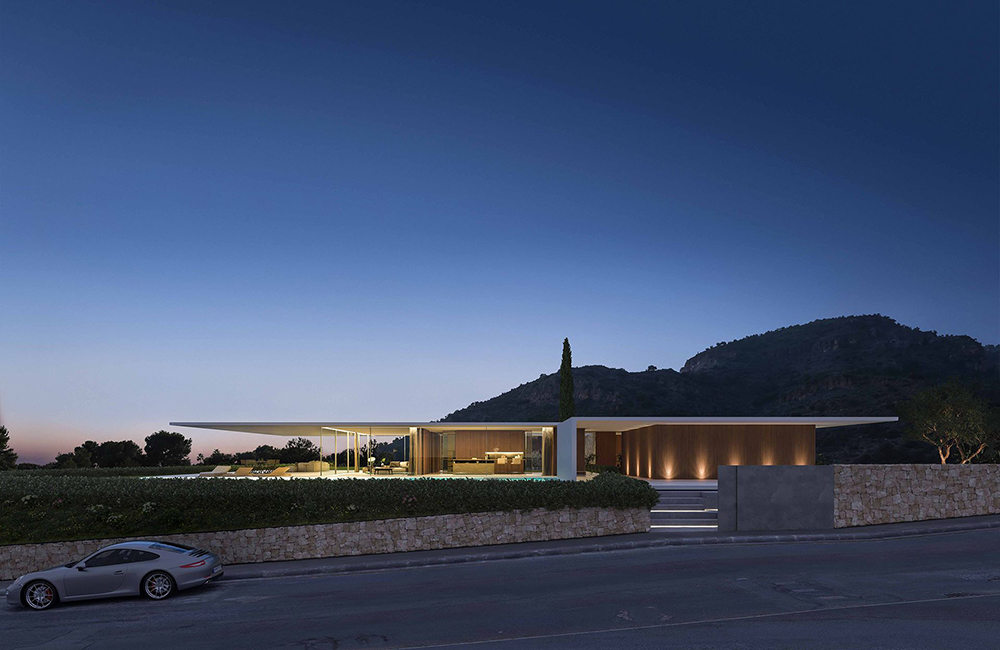
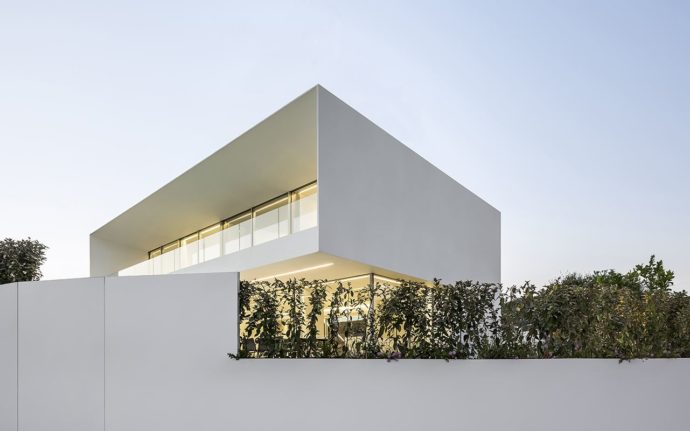
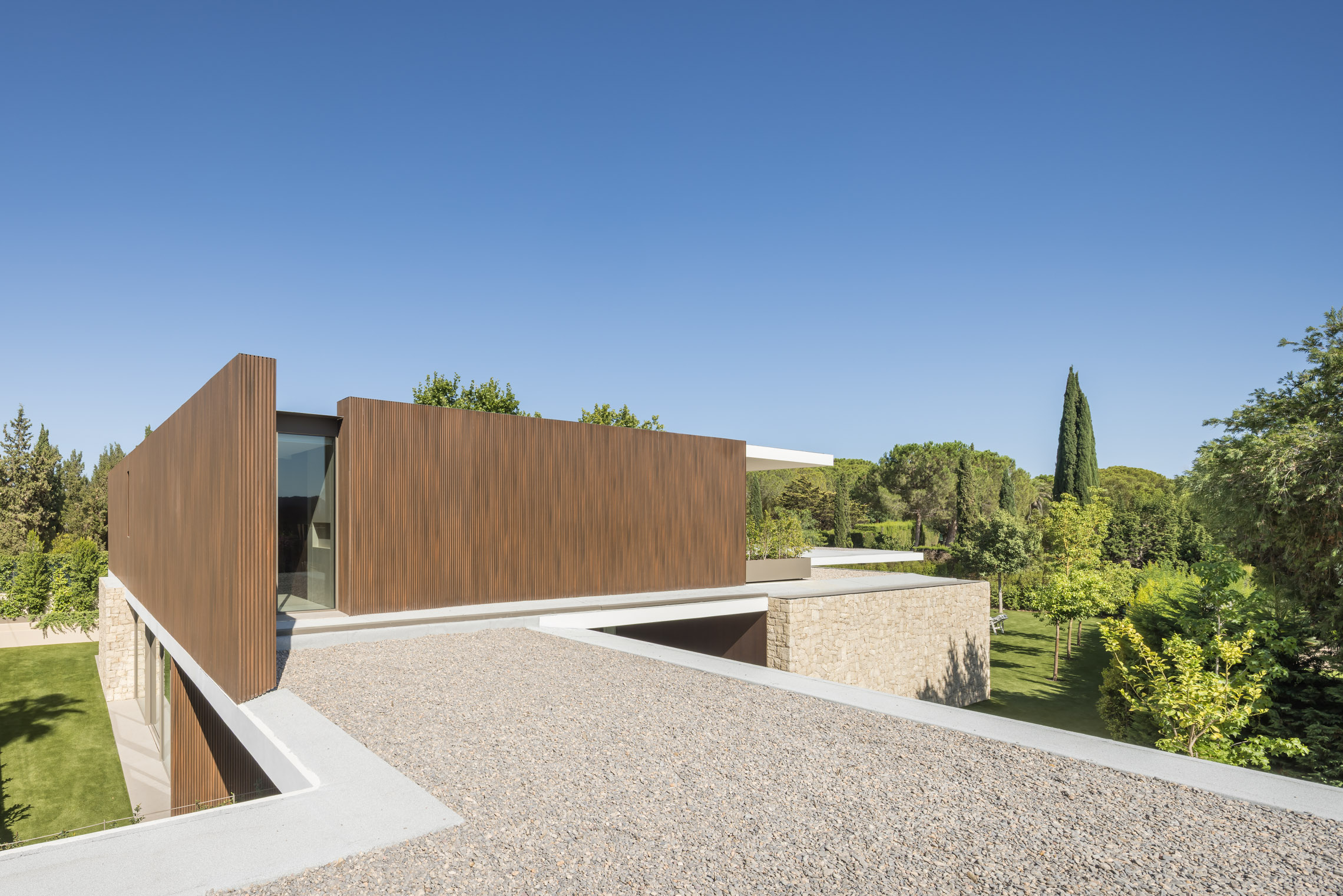
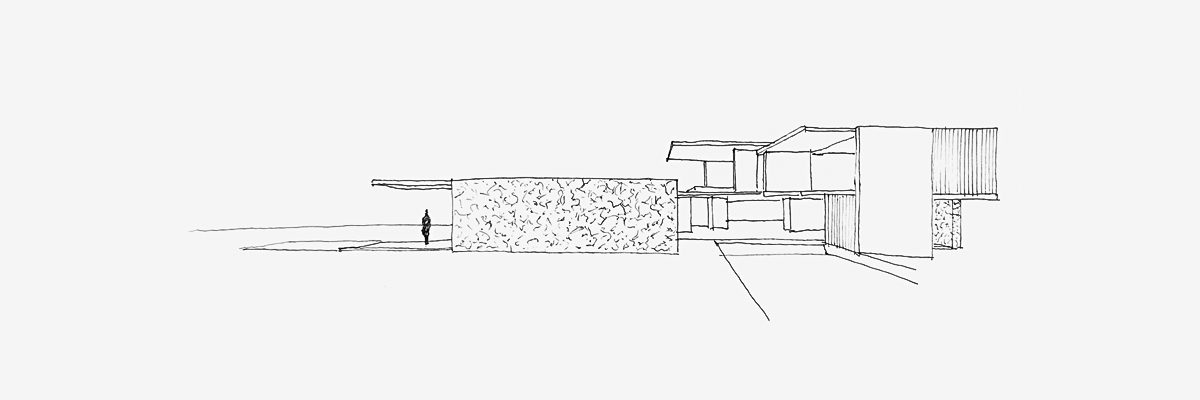
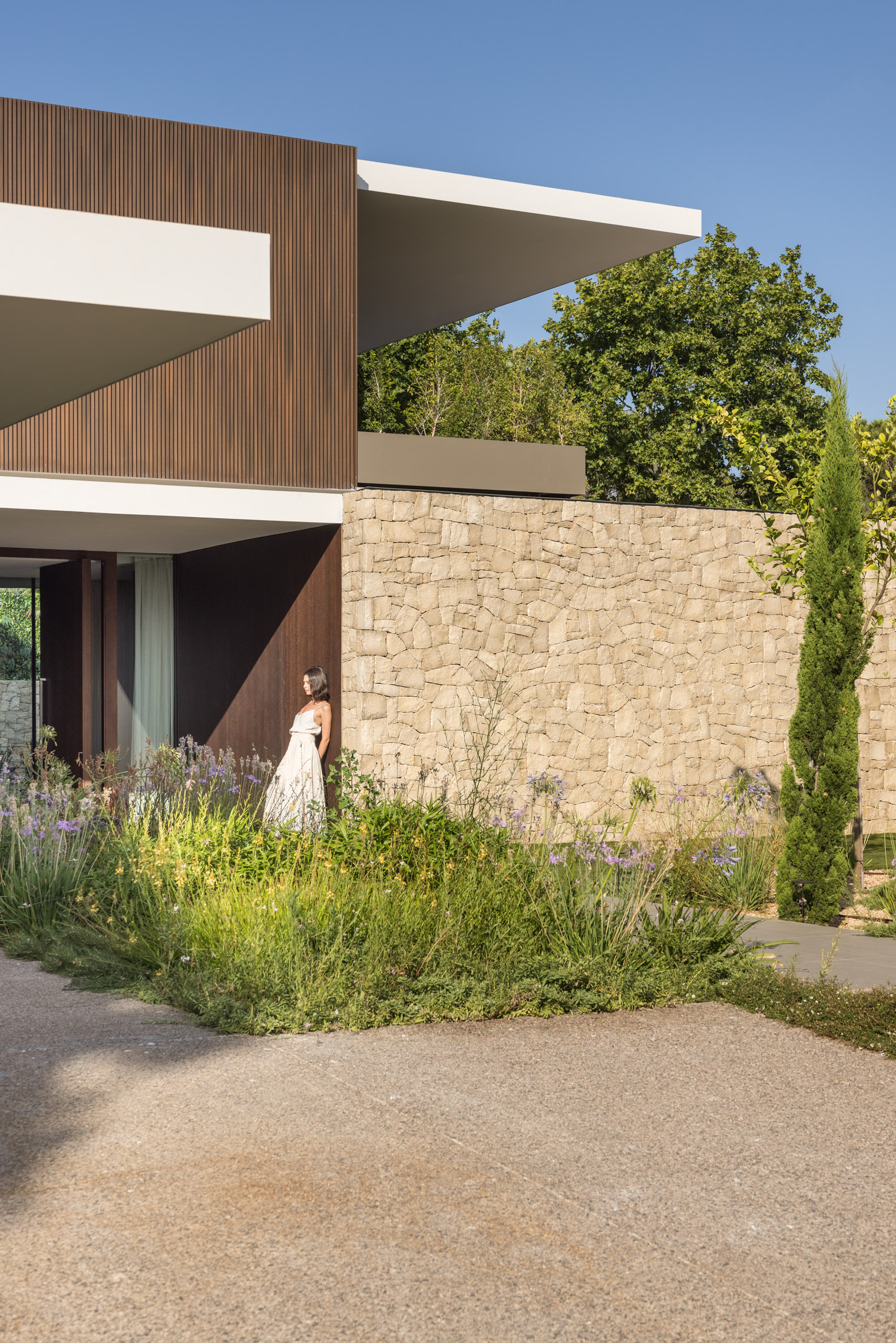
One of the project requirements was to ensure the privacy and intimacy of the inhabitants due to the proximity of adjacent buildings to the plot. That is why the façade represents the physical boundary of the house, the main protection of the private interior spaces from the outside. The decision was made to develop a solid façade, without large openings, to guarantee the effective privacy of the interior of the home.
This zeal for privacy is combined with strict control of the views, so that each room has a unique orientation, without being affected. In addition, the master bedroom has its own outdoor space, which is properly protected and isolated.
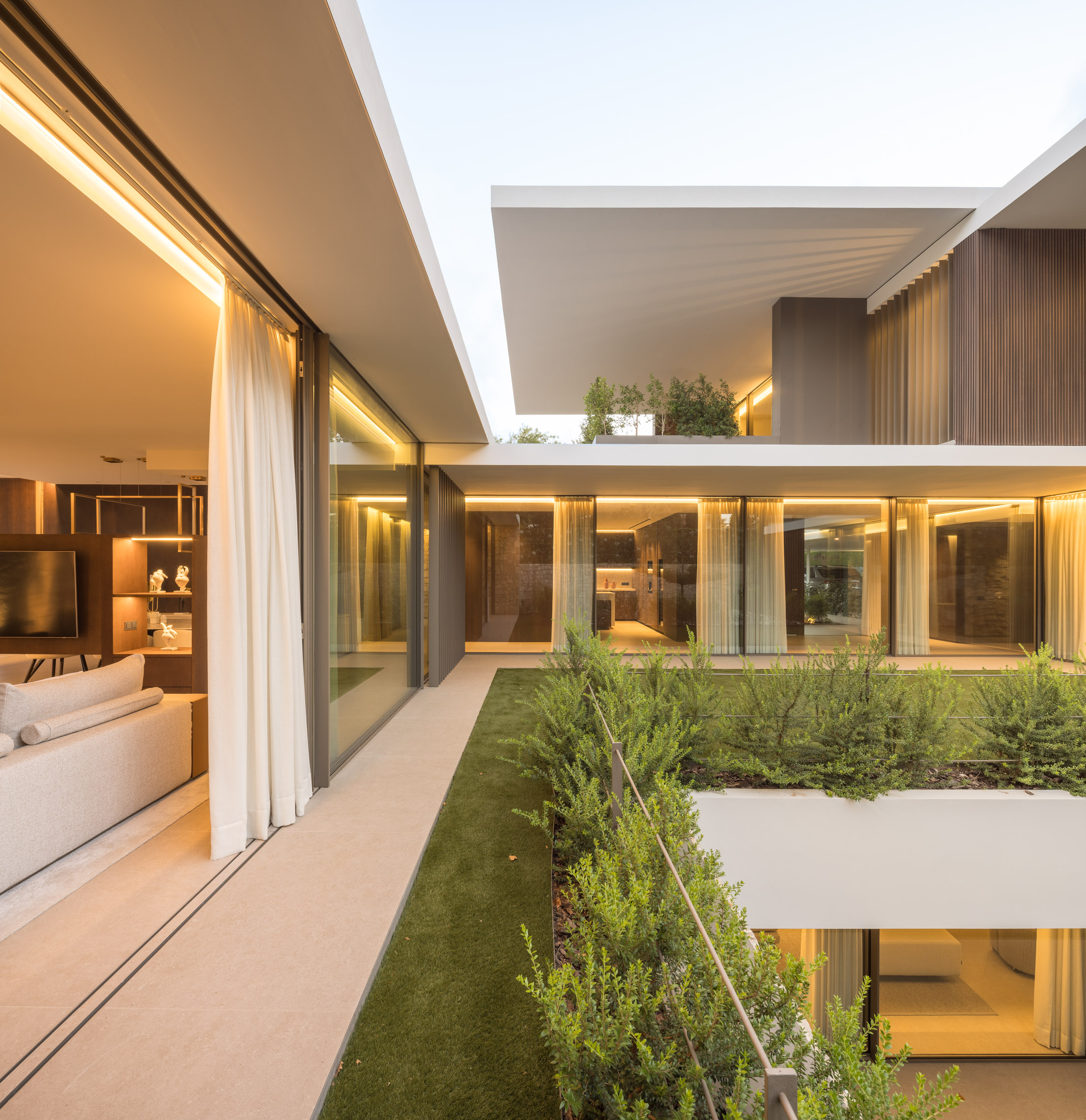
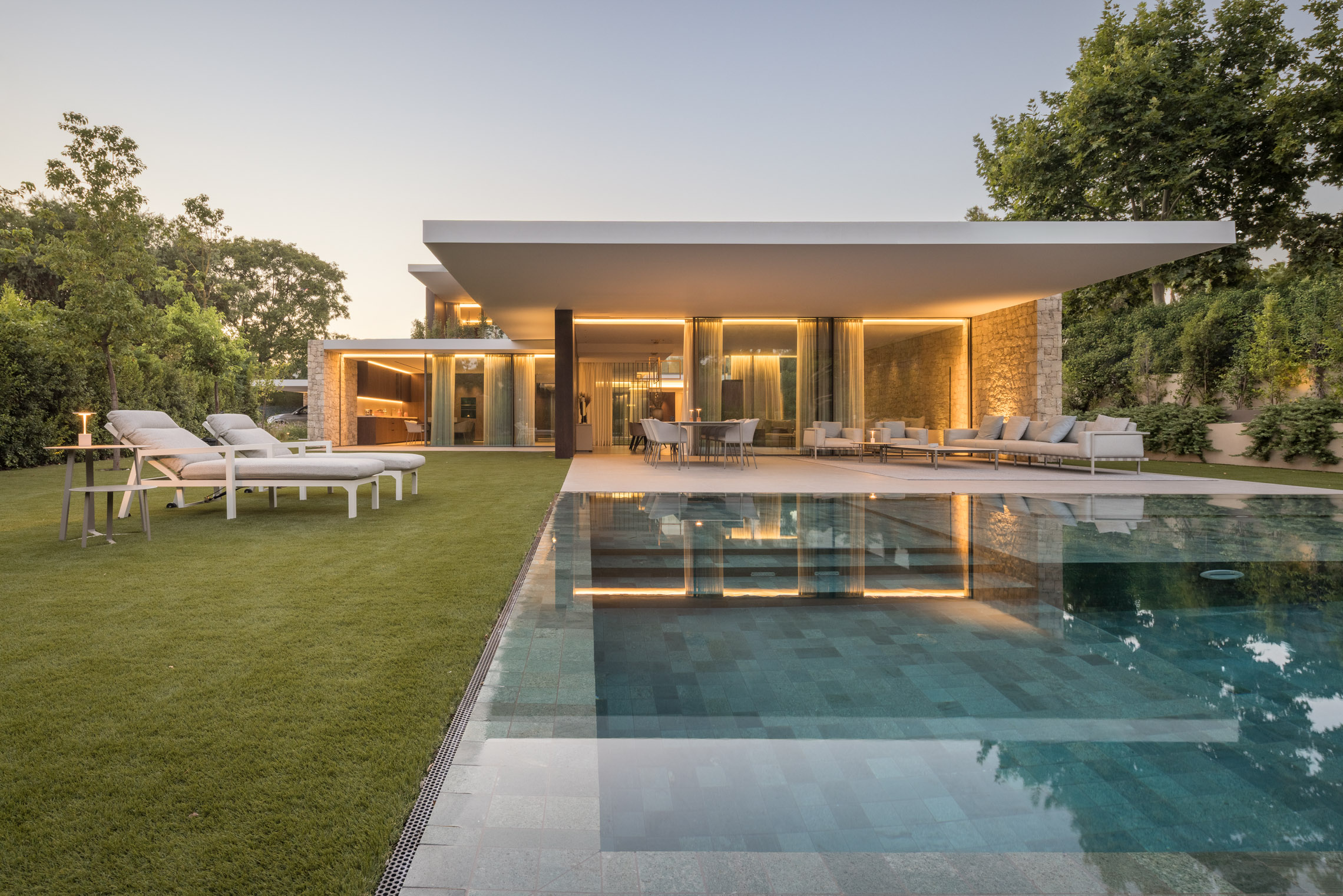
In contrast, the façades facing the garden areas are diluted by large glass windows, opening up the interior spaces to the exterior in an uninterrupted continuity. This layout enhances the predominant north-south axis, with solid side walls and ethereal enclosures at the ends.
FOLDED ARCHITECTURE
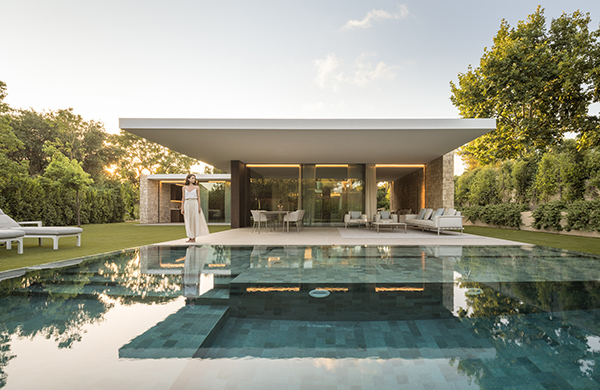
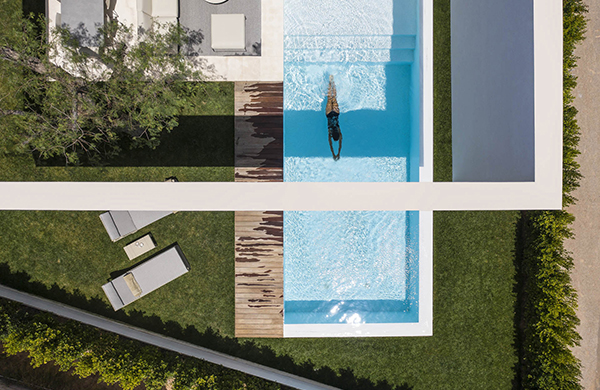
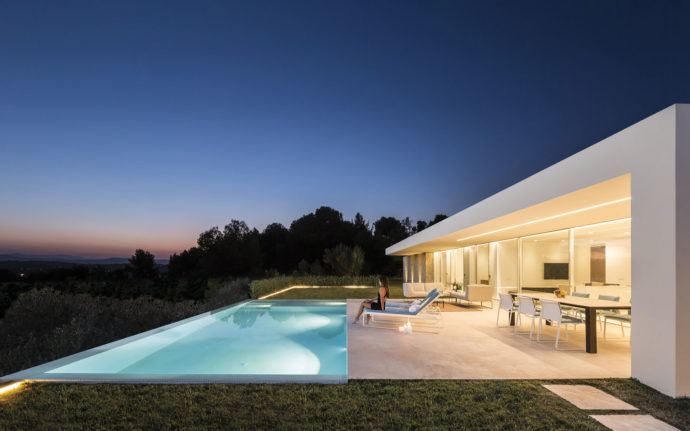
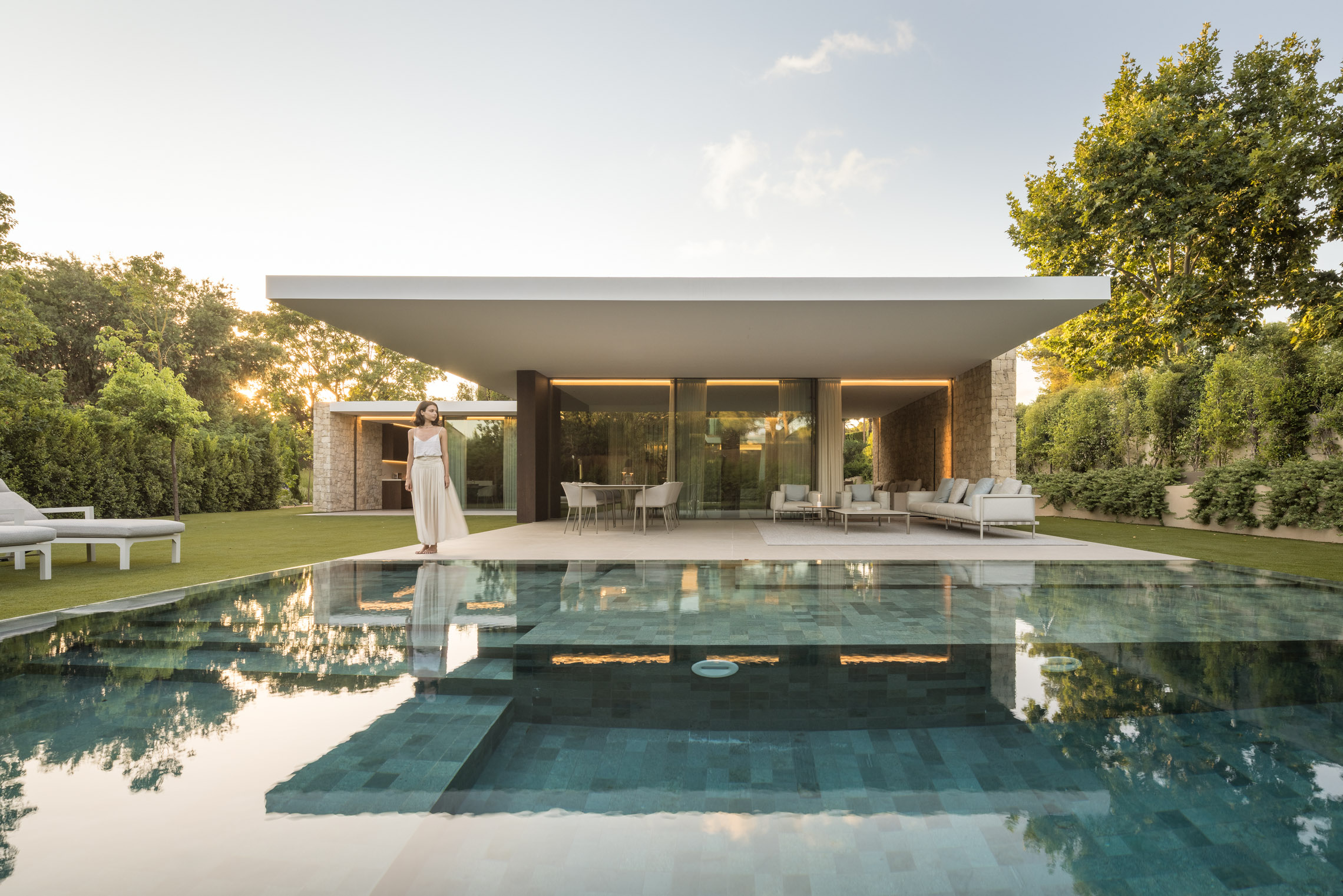
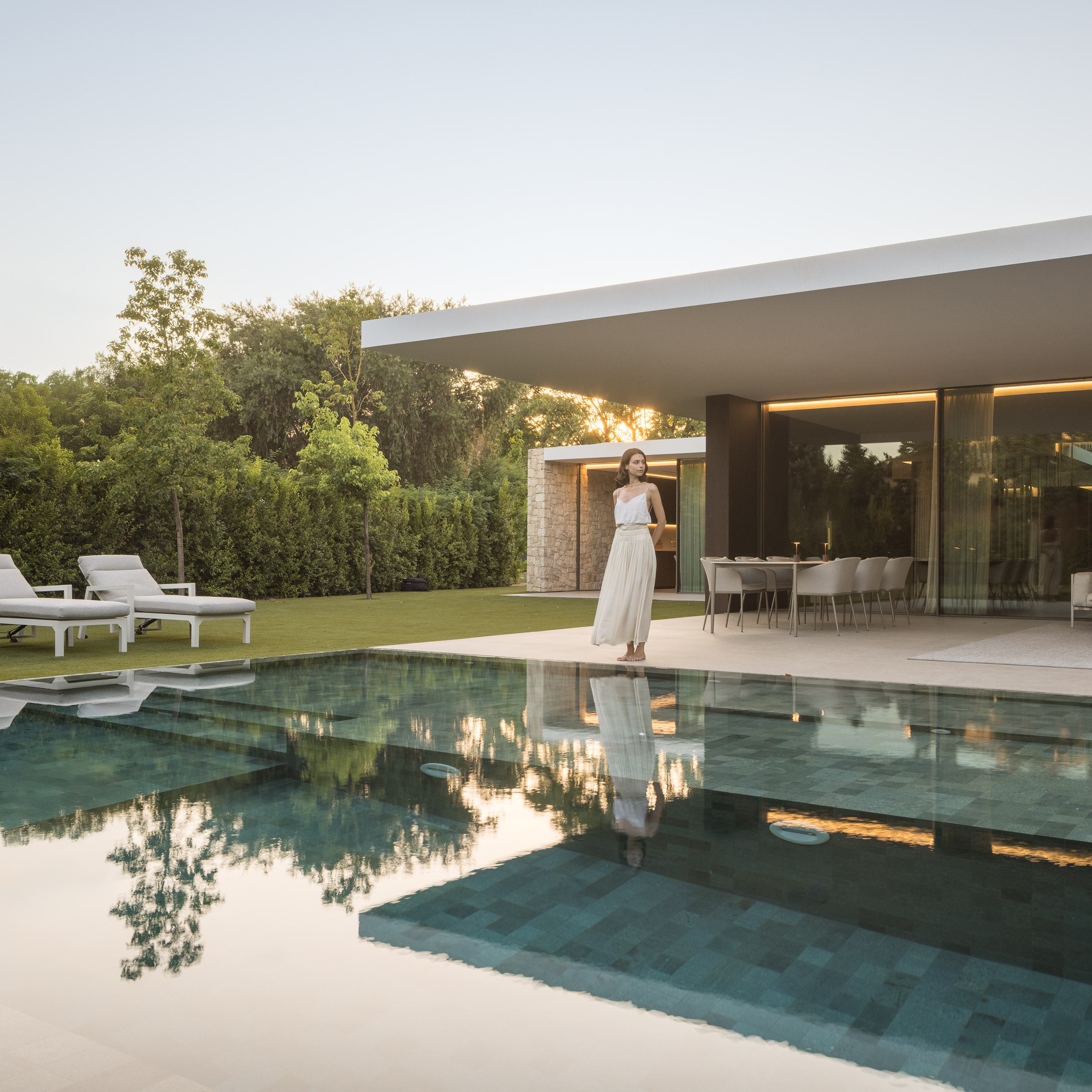
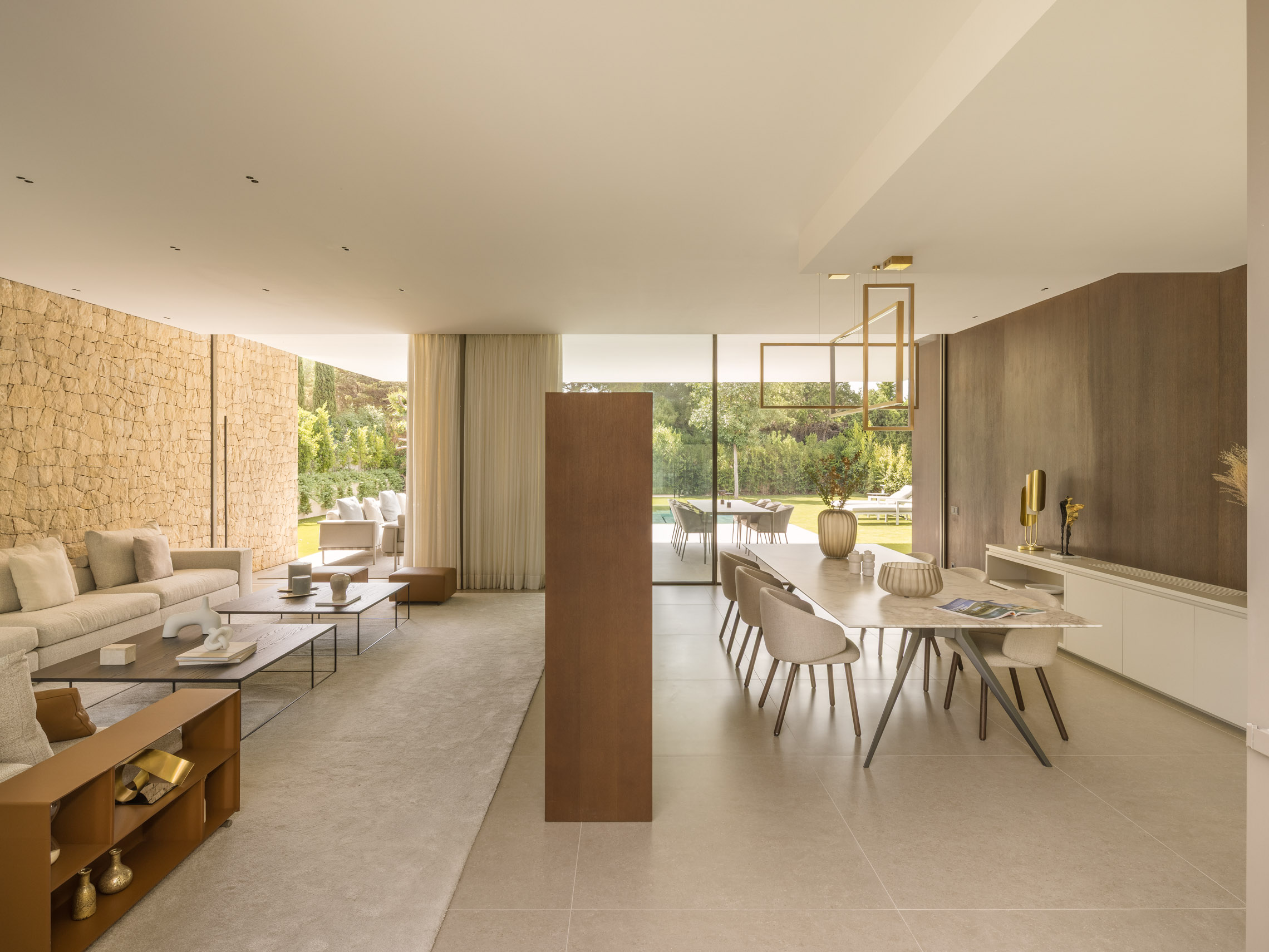
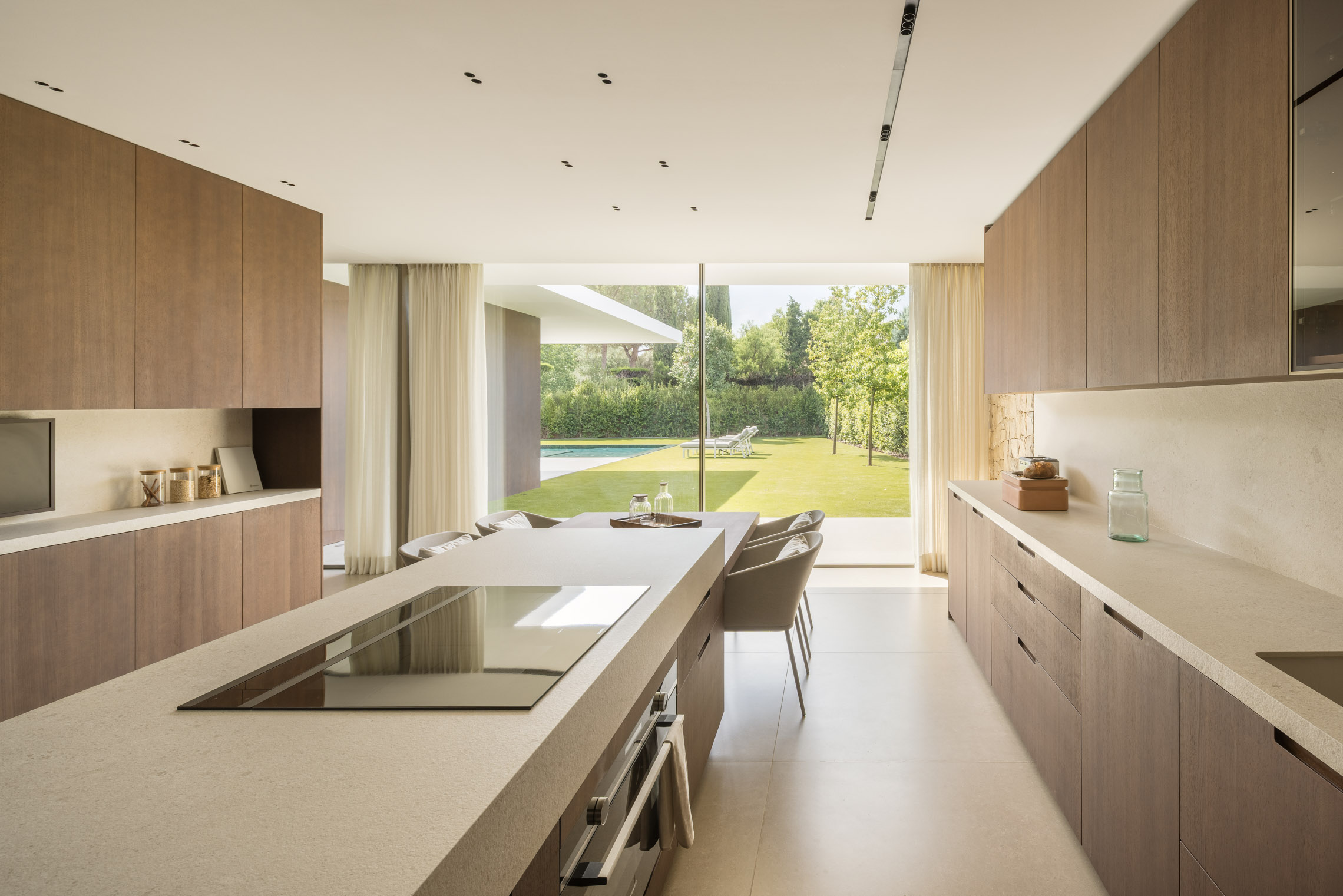
The south-facing orientation was chosen for the main outdoor spaces of the house, which are visually and functionally connected to the most important rooms in the house. The living room, dining room and kitchen enjoy their own autonomy, each occupying one of the exclusive outdoor areas that converge on large terraces around the pool in search of the best orientations.
In addition, the visual connection extends both to the exterior and through it, as the central courtyard acts as a visual link in the project and allows both ends of the garden to communicate with each other.
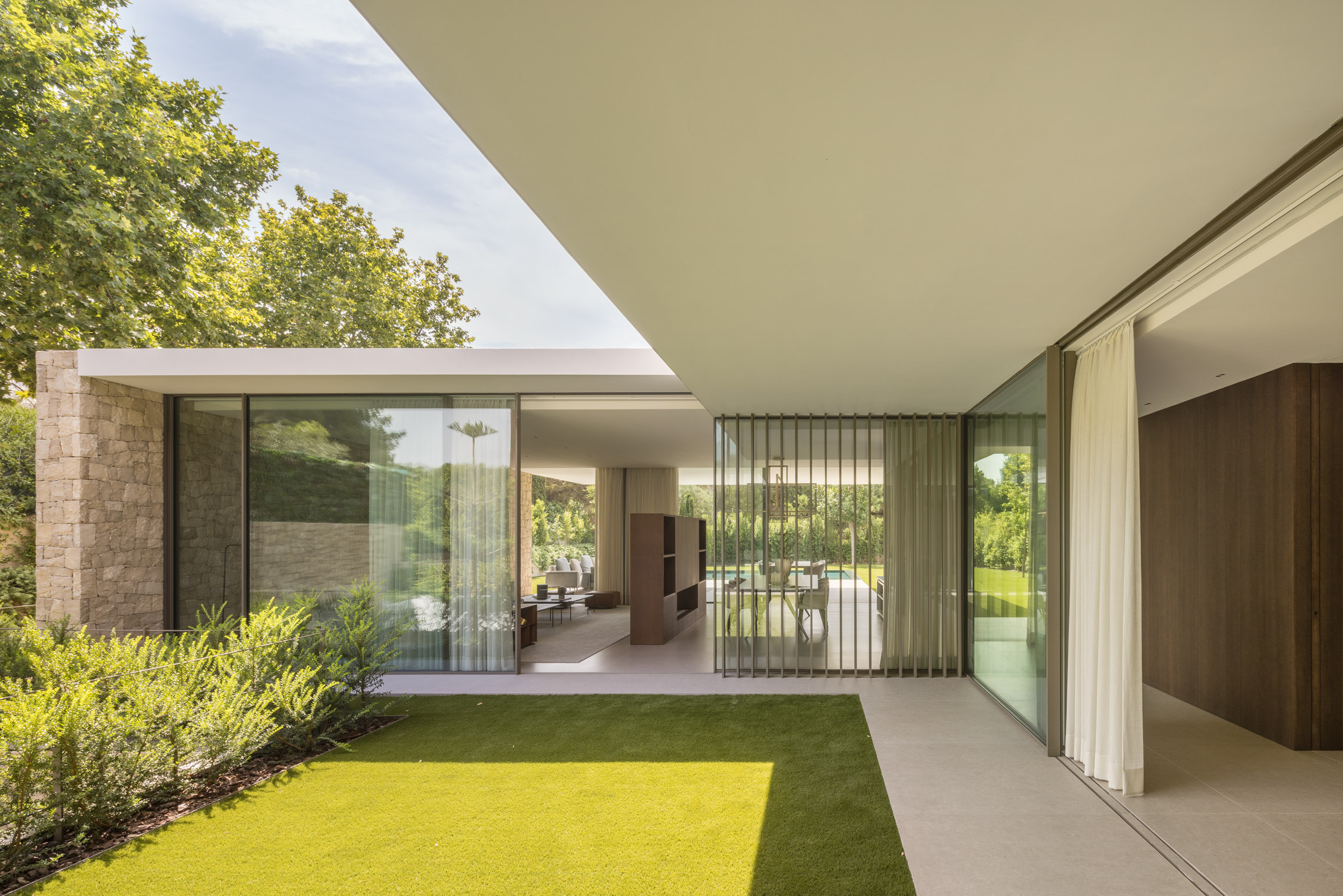
SPACES OF LIGHT AND INTIMACY
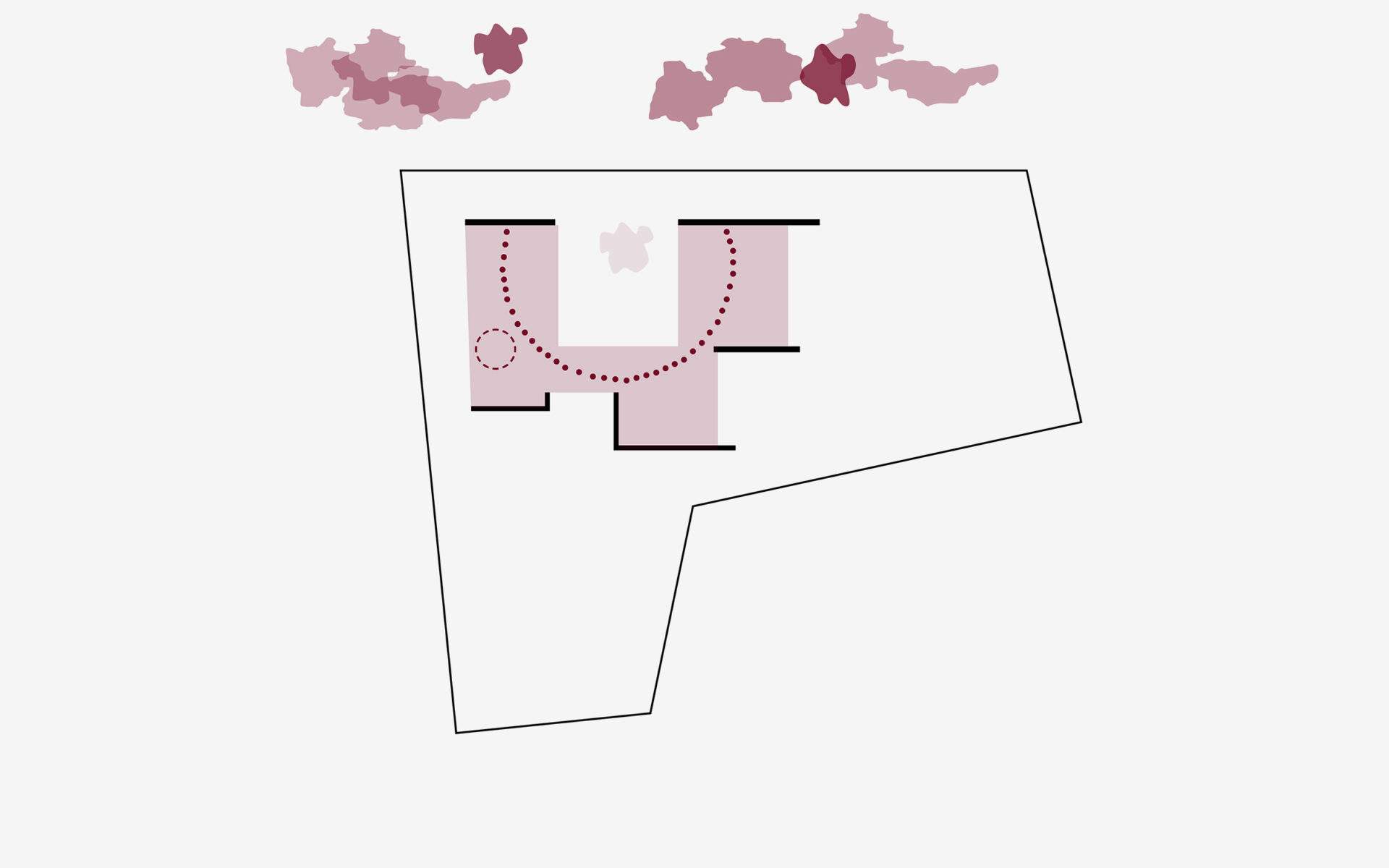
Between the interlocking undulating surfaces, the open spaces open up freely and fluidly, creating their own atmospheres and visually connecting the different levels.
Through these connections, the richness of visual escapes is multiplied in skewed views between rooms, courtyards, terraces and gardens on different levels, forming a changing, dynamic interior landscape in constant motion.
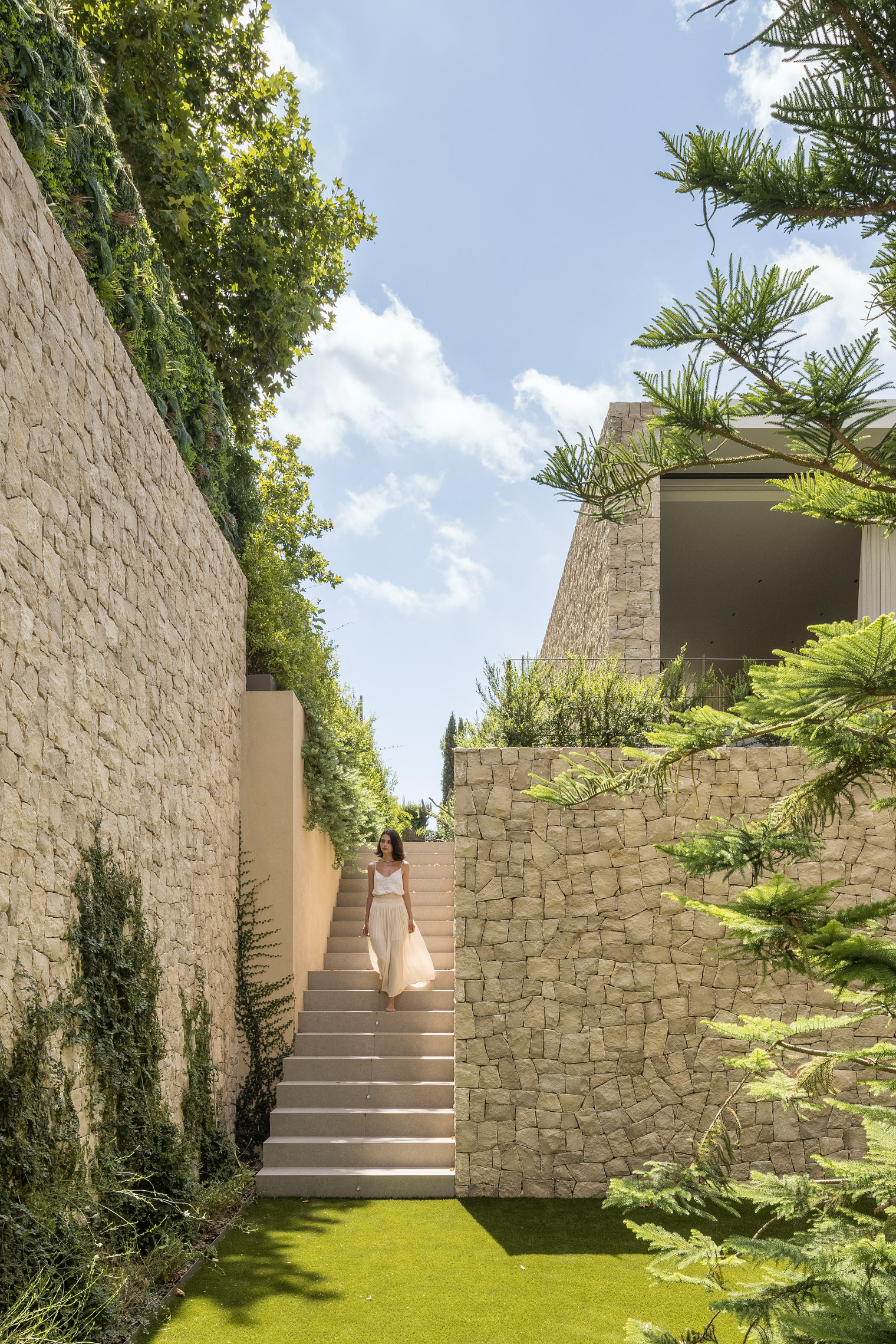
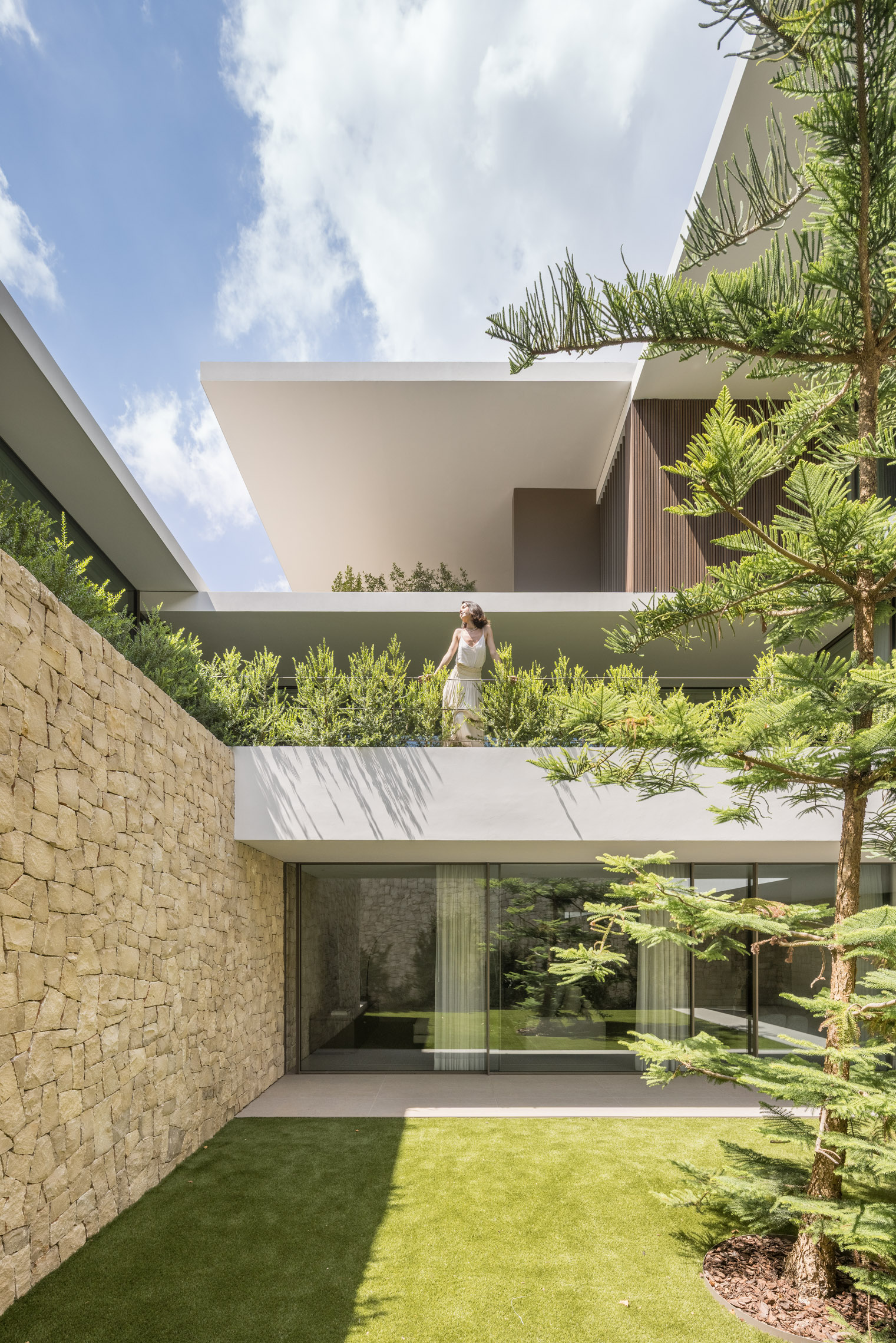
THE PATIO LEADING TO THE GREEN CORRIDOR
Providing natural light and cross views to the heart of the house is fundamental to this project. A generous landscaped courtyard opens onto the green corridor to the east, filling all the interiors with light and allowing visual escapes to the treetops of the ‘hidden walkway’.
All the rooms in the day area are arranged around the courtyard, creating cloistered walkways in constant contact with the landscaped exterior.
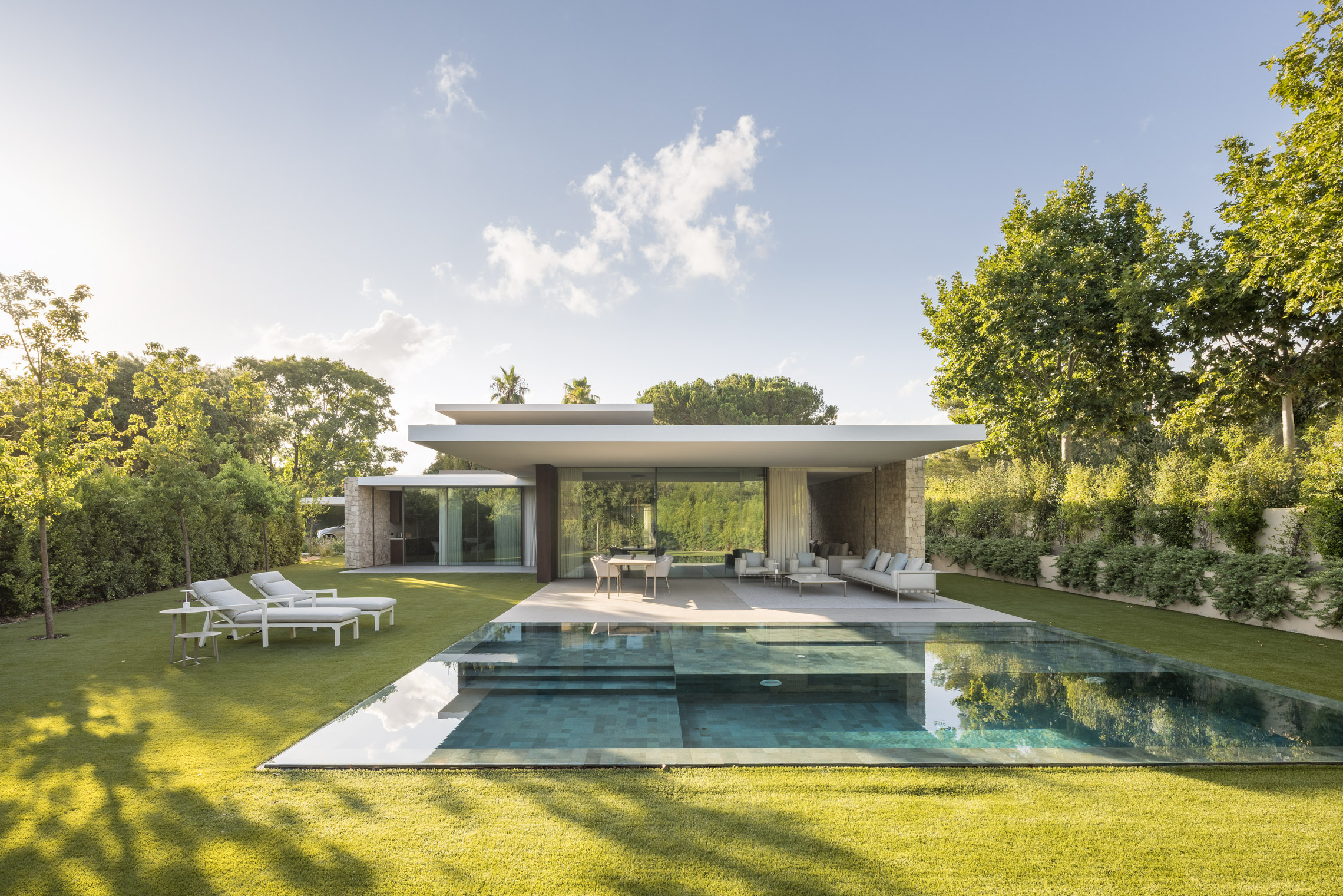
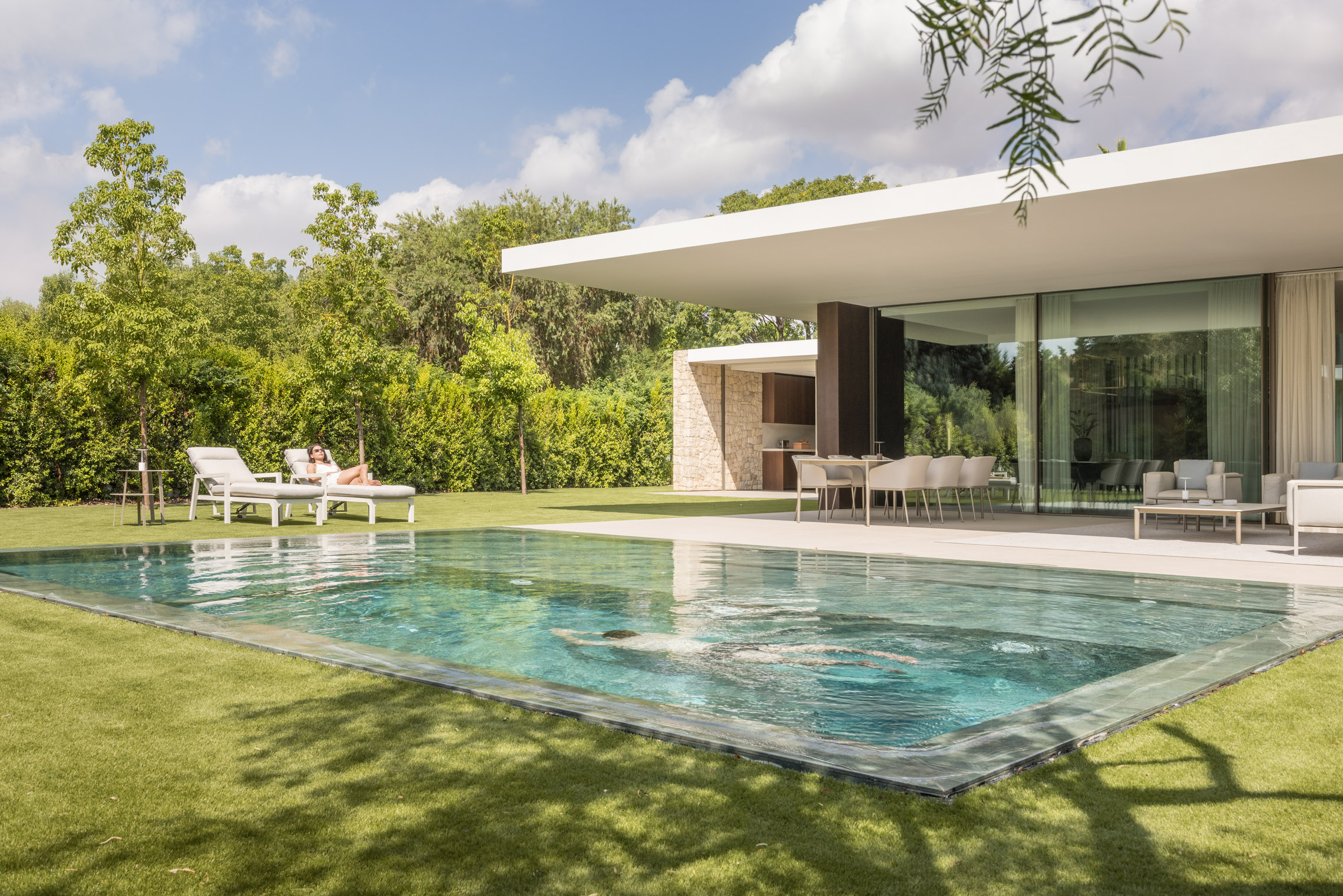
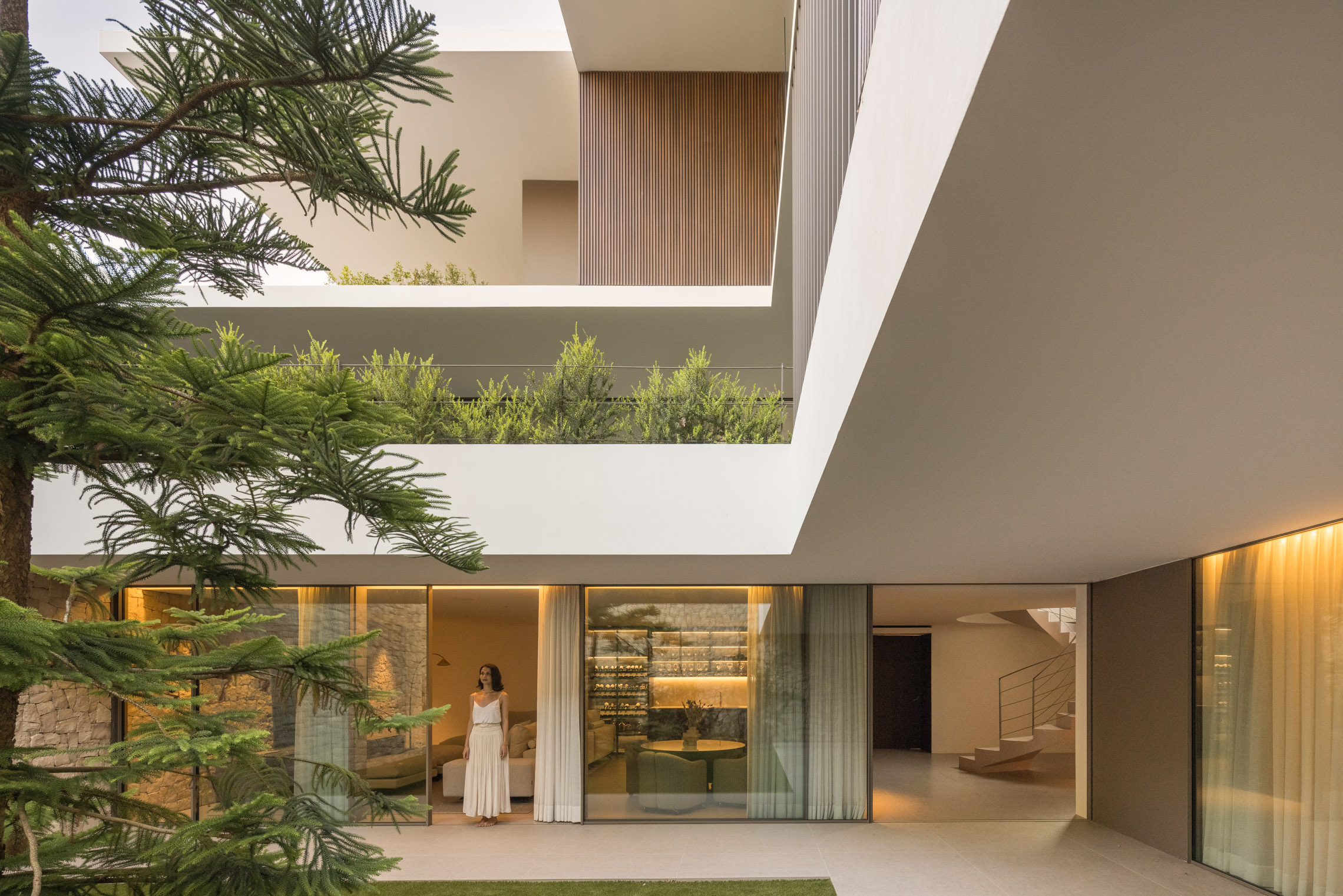
The dwelling is developed as a slender constructed element that folds, embracing the spaces it forms with each fold, in a set of solid pleated sheets that, with each rhythmic movement, rock interiors that are partly hidden and partly open, hinting at and concealing themselves, opening and closing.
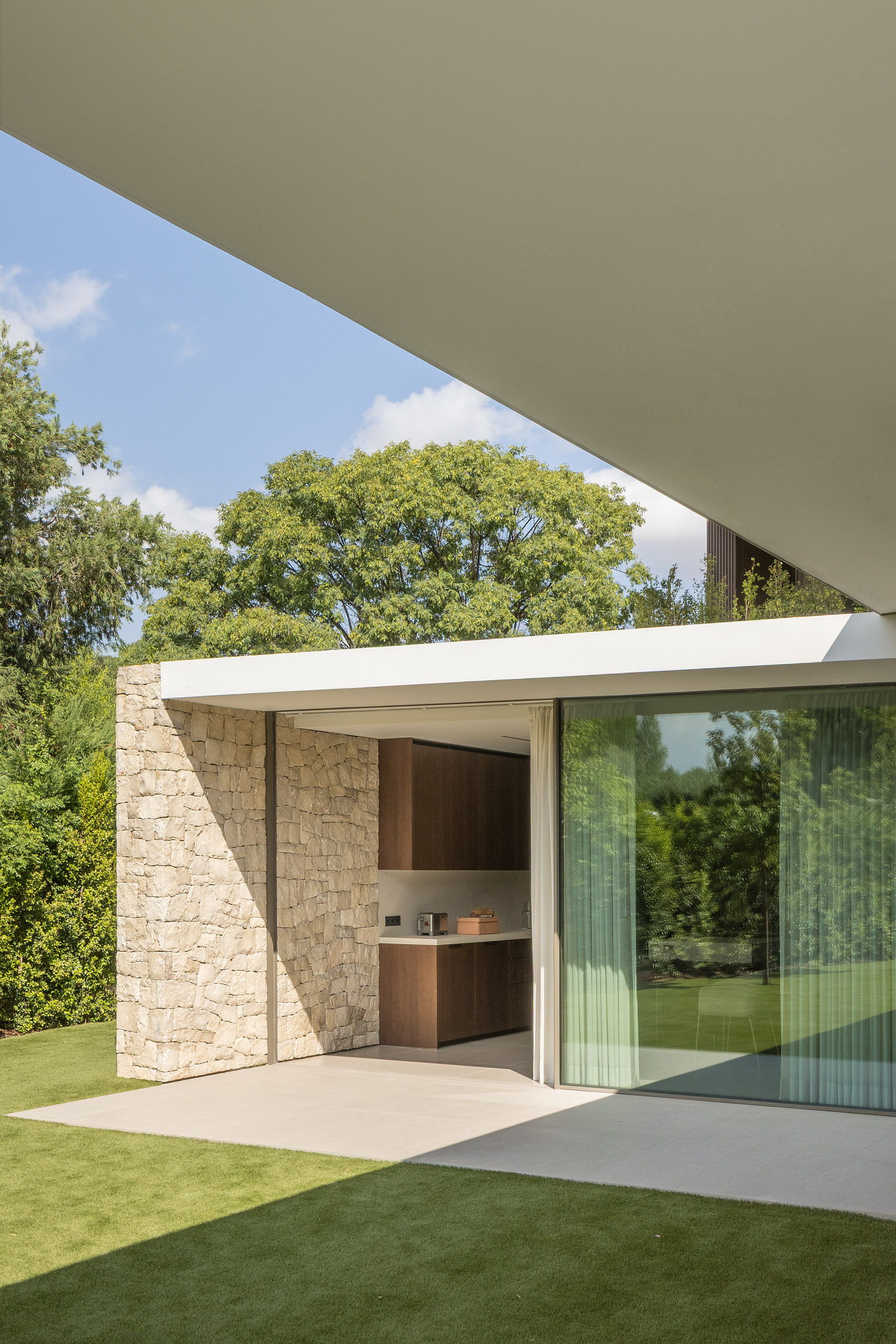
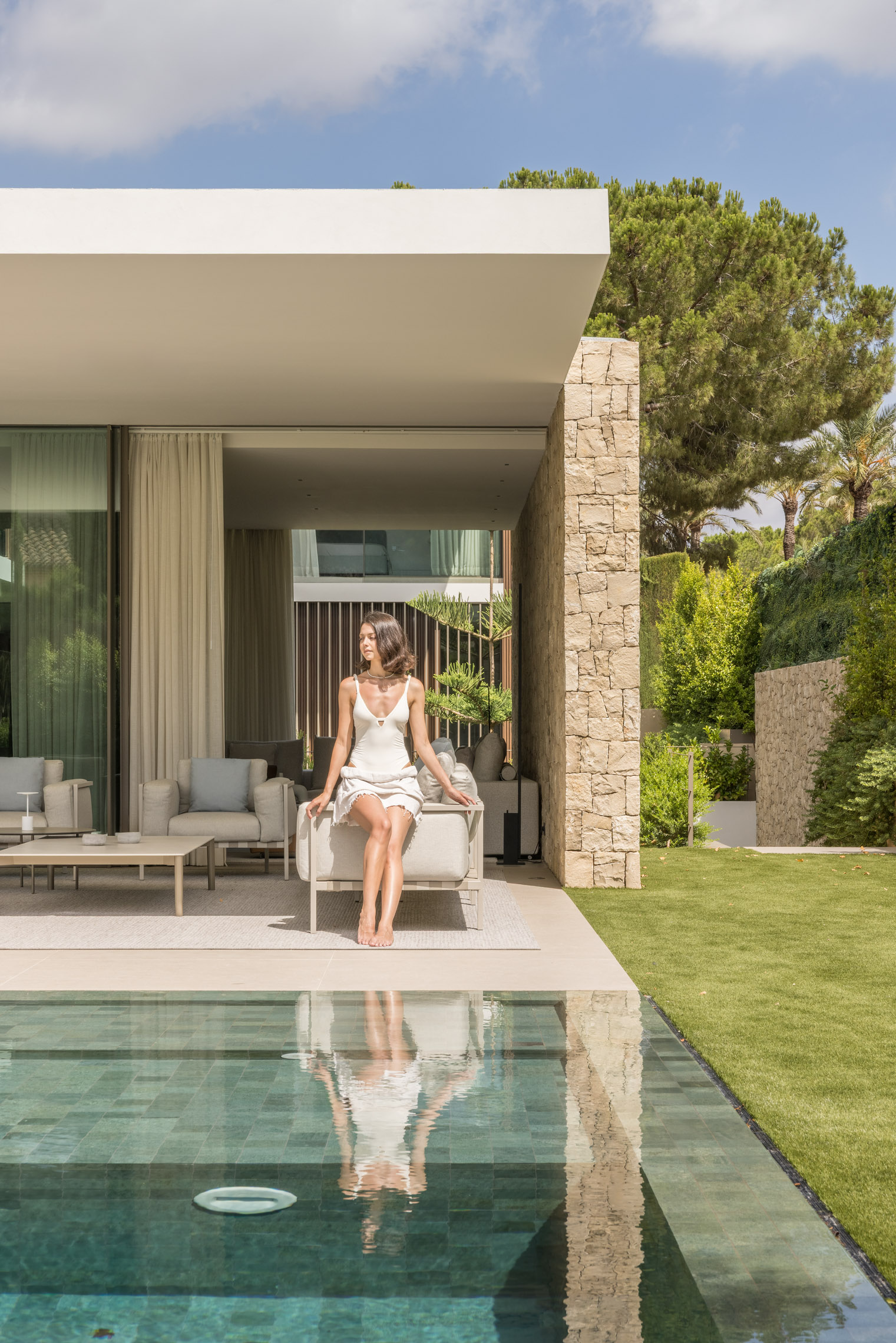
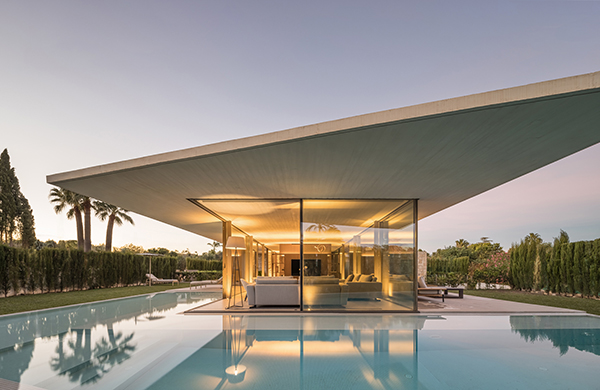
The architecture extends in cantilevered, suspended planes, gently defying gravity. Its horizontal lines project into the void and find a silent mirror in the water of the pool, where the house is duplicated and becomes ethereal. The boundary between the built and the reflected is blurred.
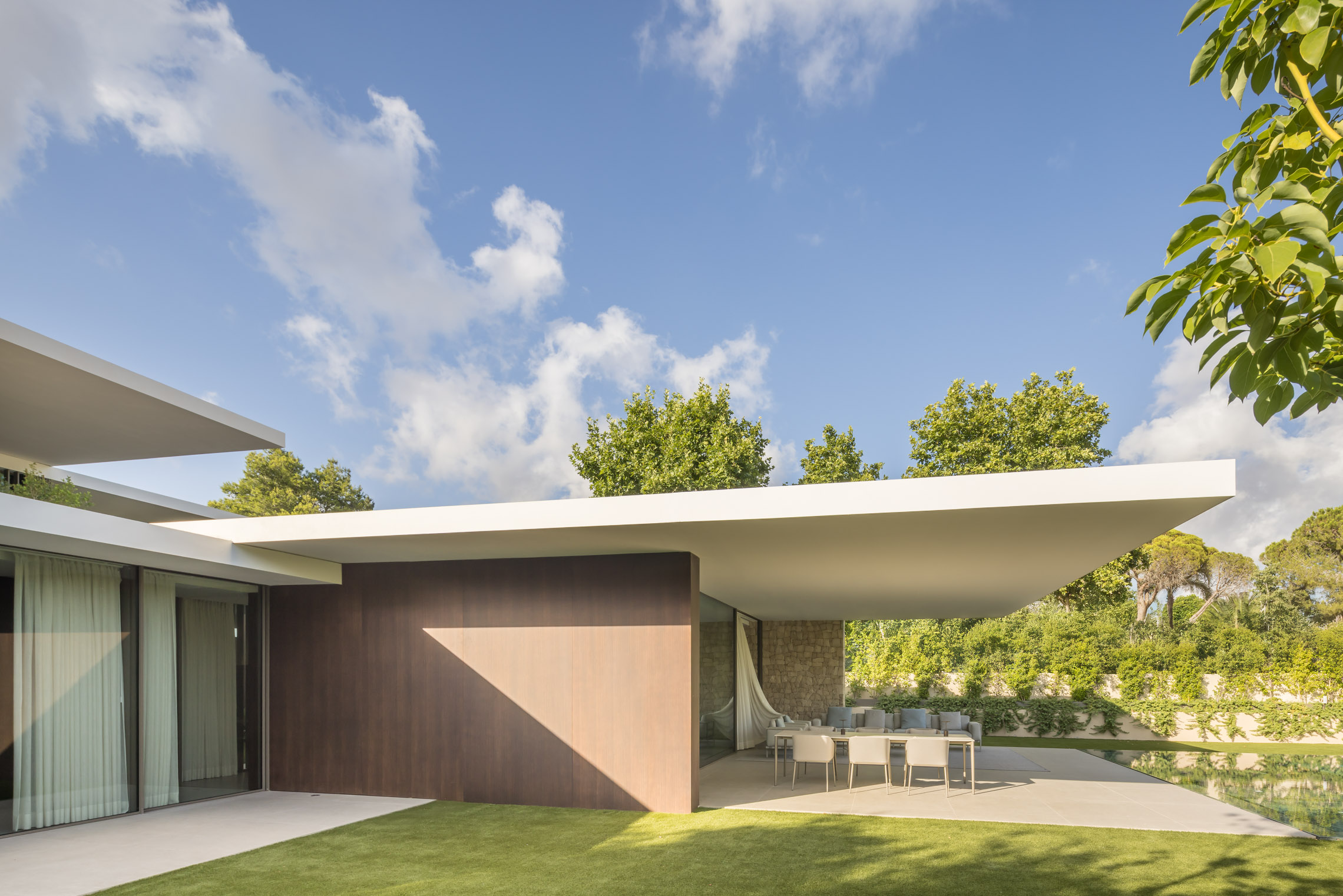
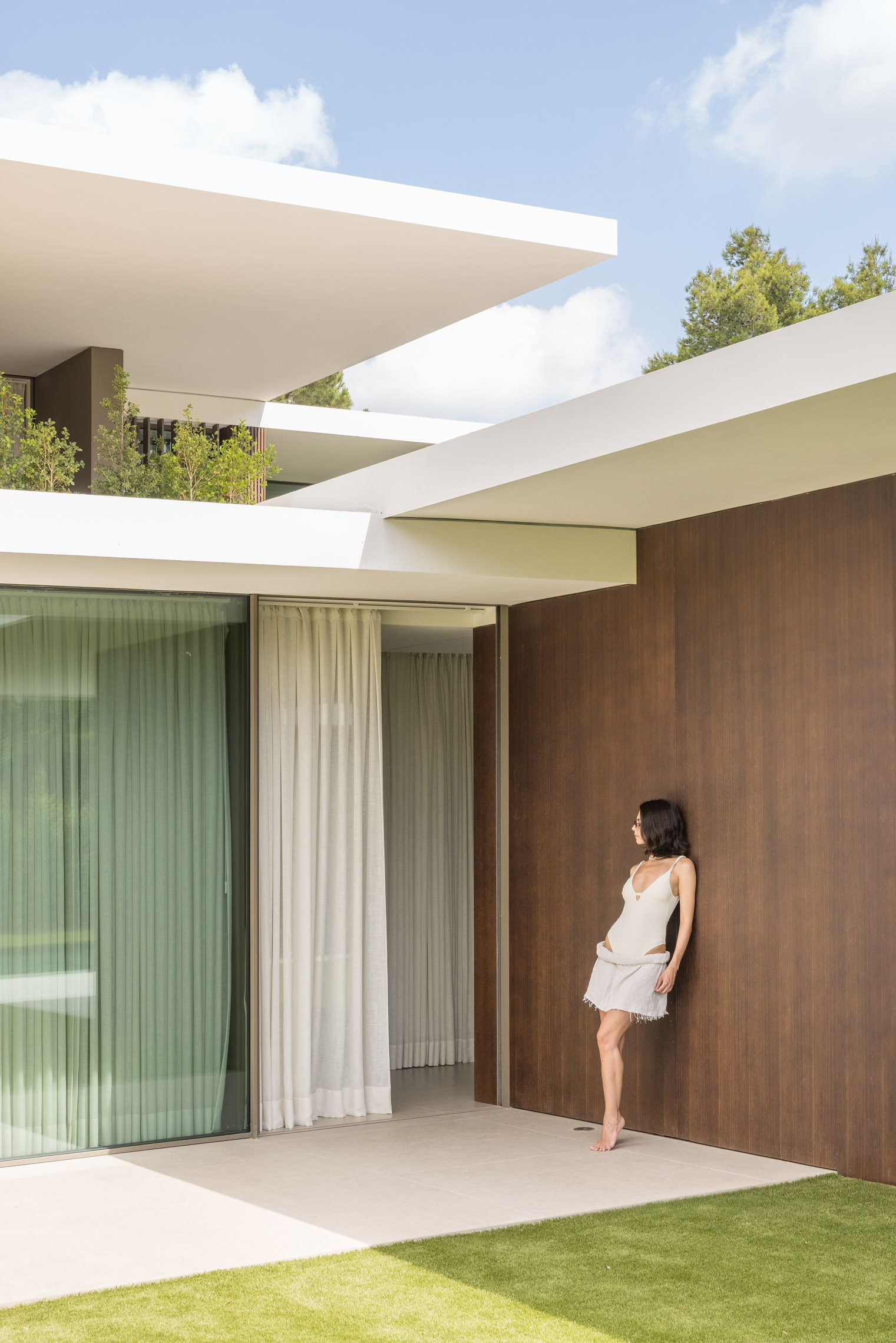
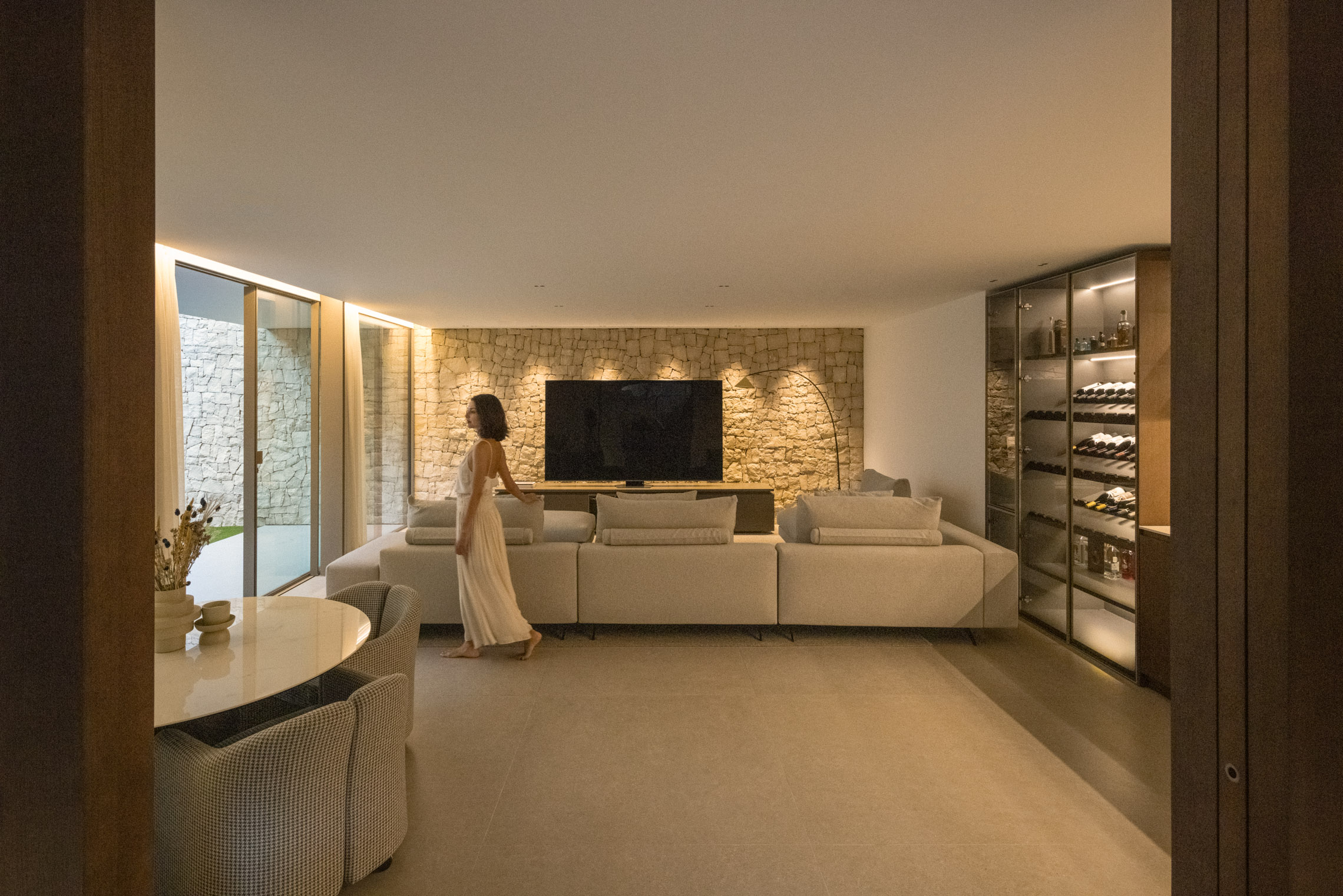
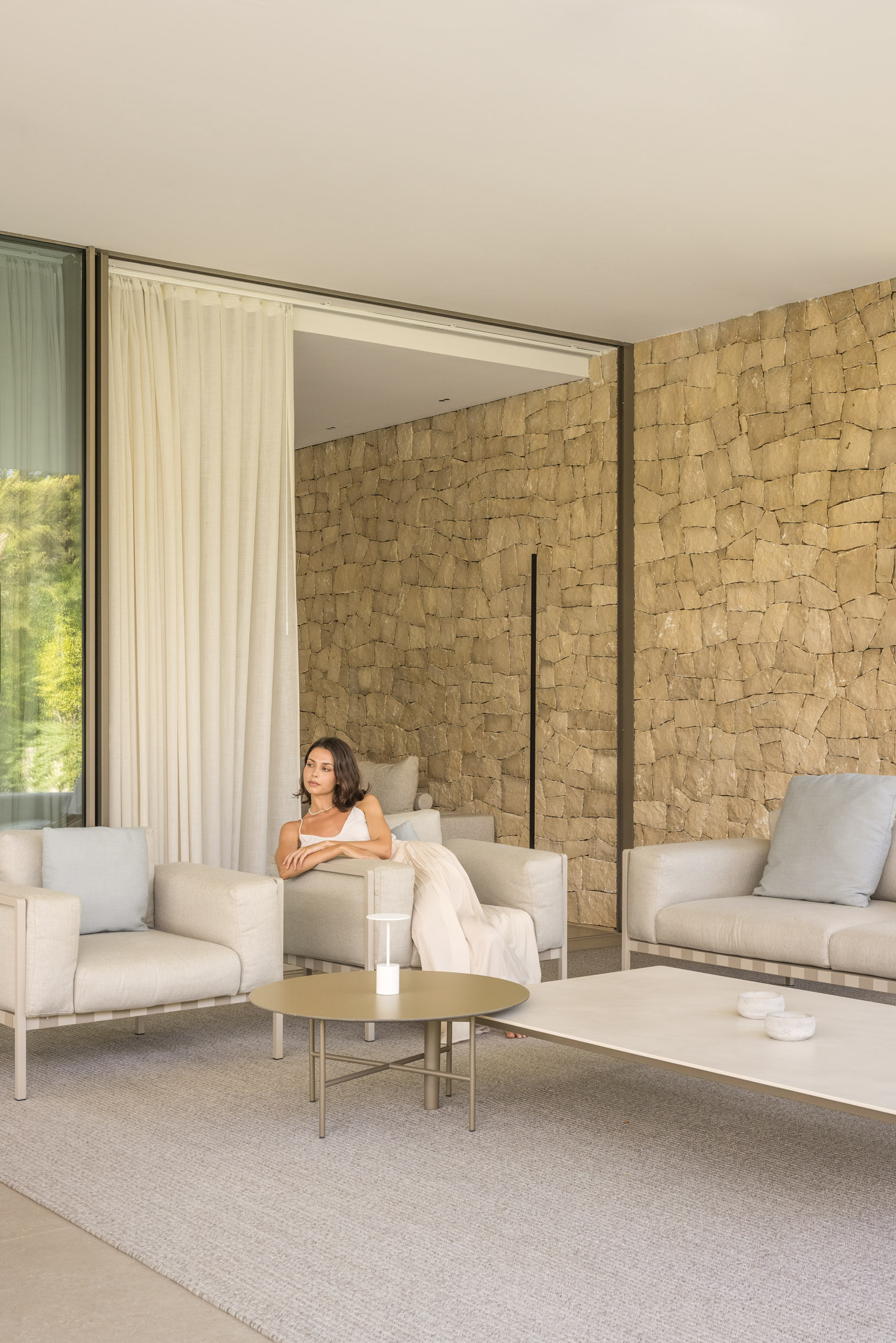
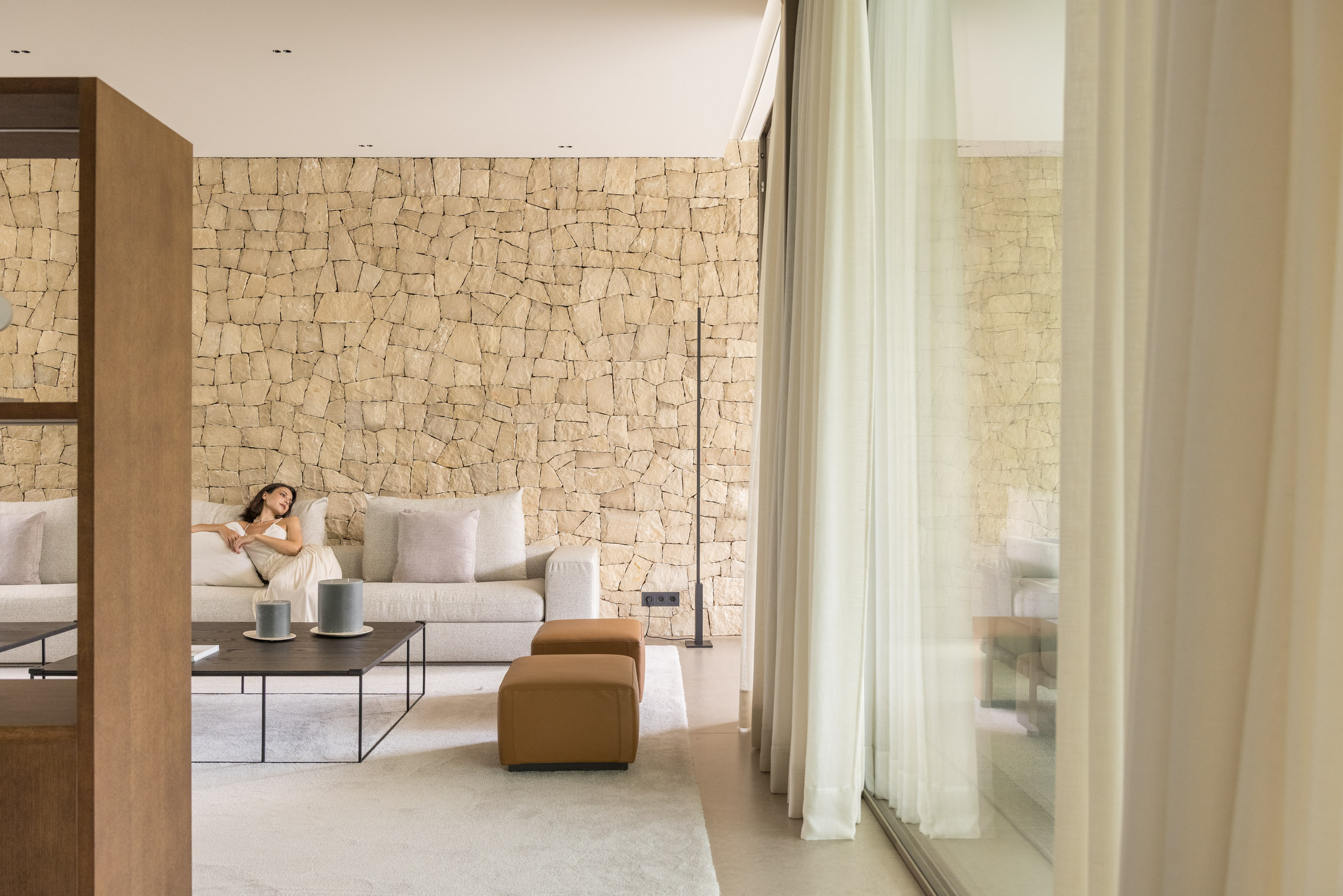
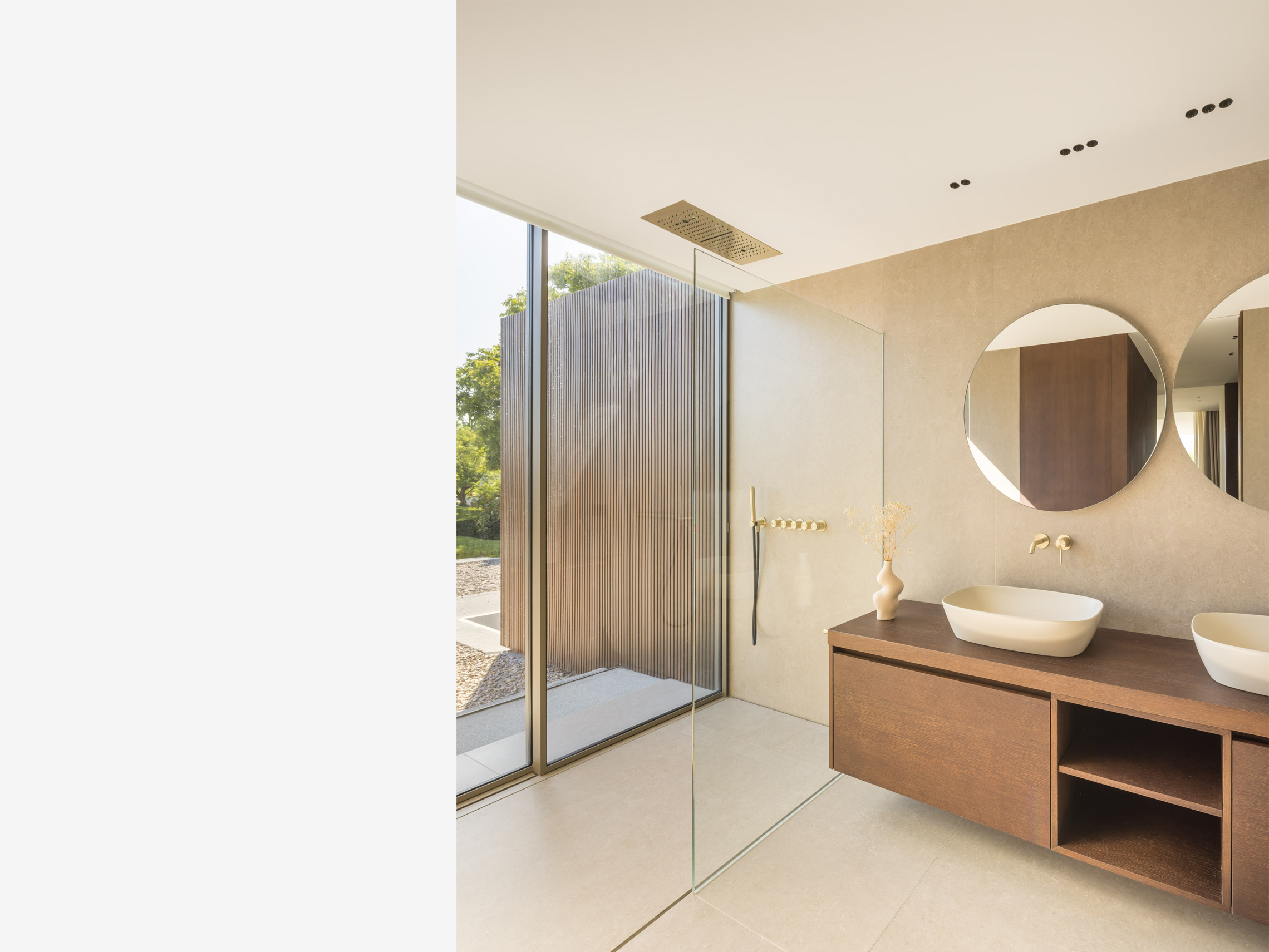
The combination of textures—the roughness of the stone used in the masonry, the tactile warmth of the wood, and the visual softness of the floors—creates a welcoming atmosphere, where each space is designed for everyday living, relaxation, and connection with nature. The house does not seek to impose itself, but rather to blend in, offering comfort through simplicity and sincere materiality.
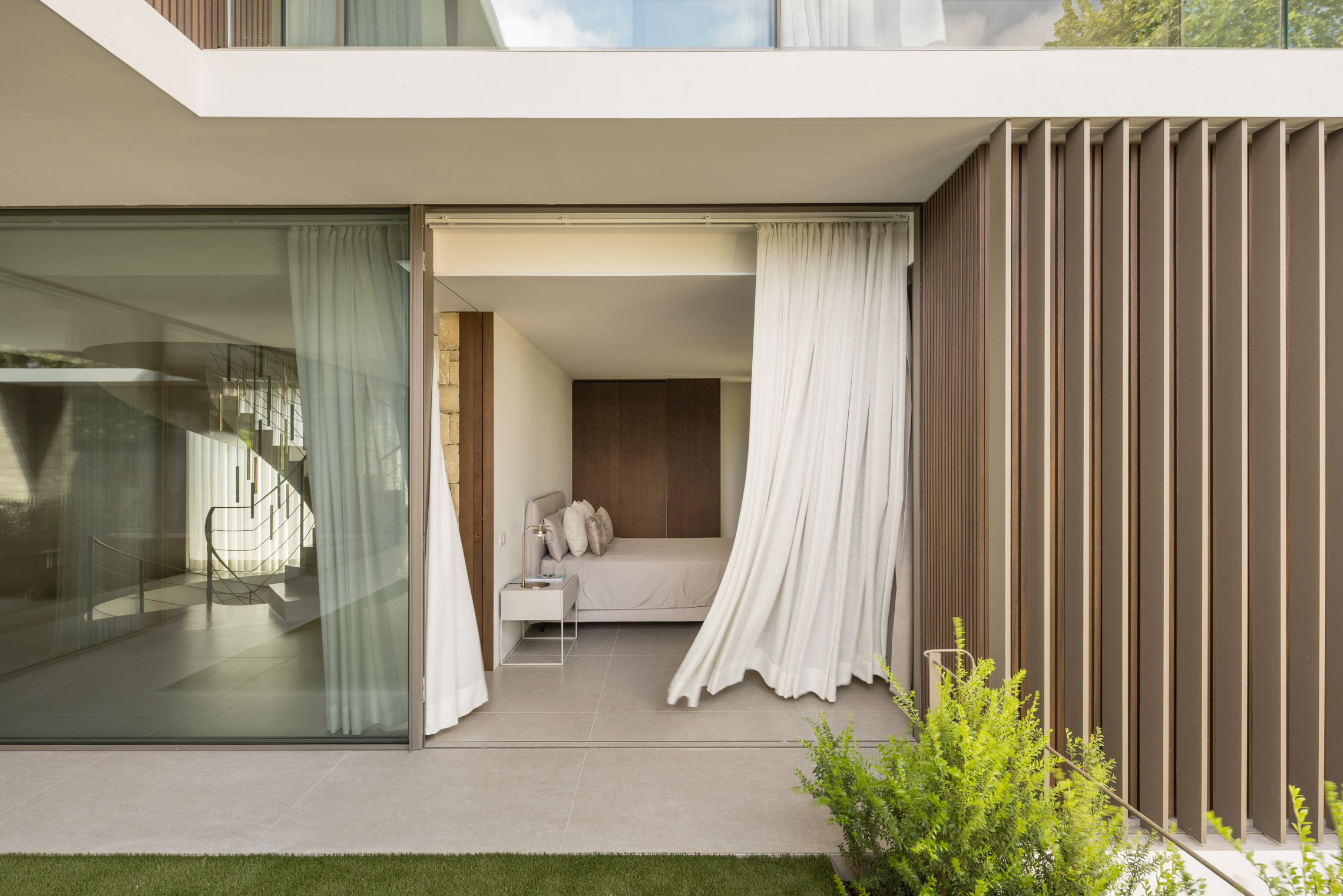
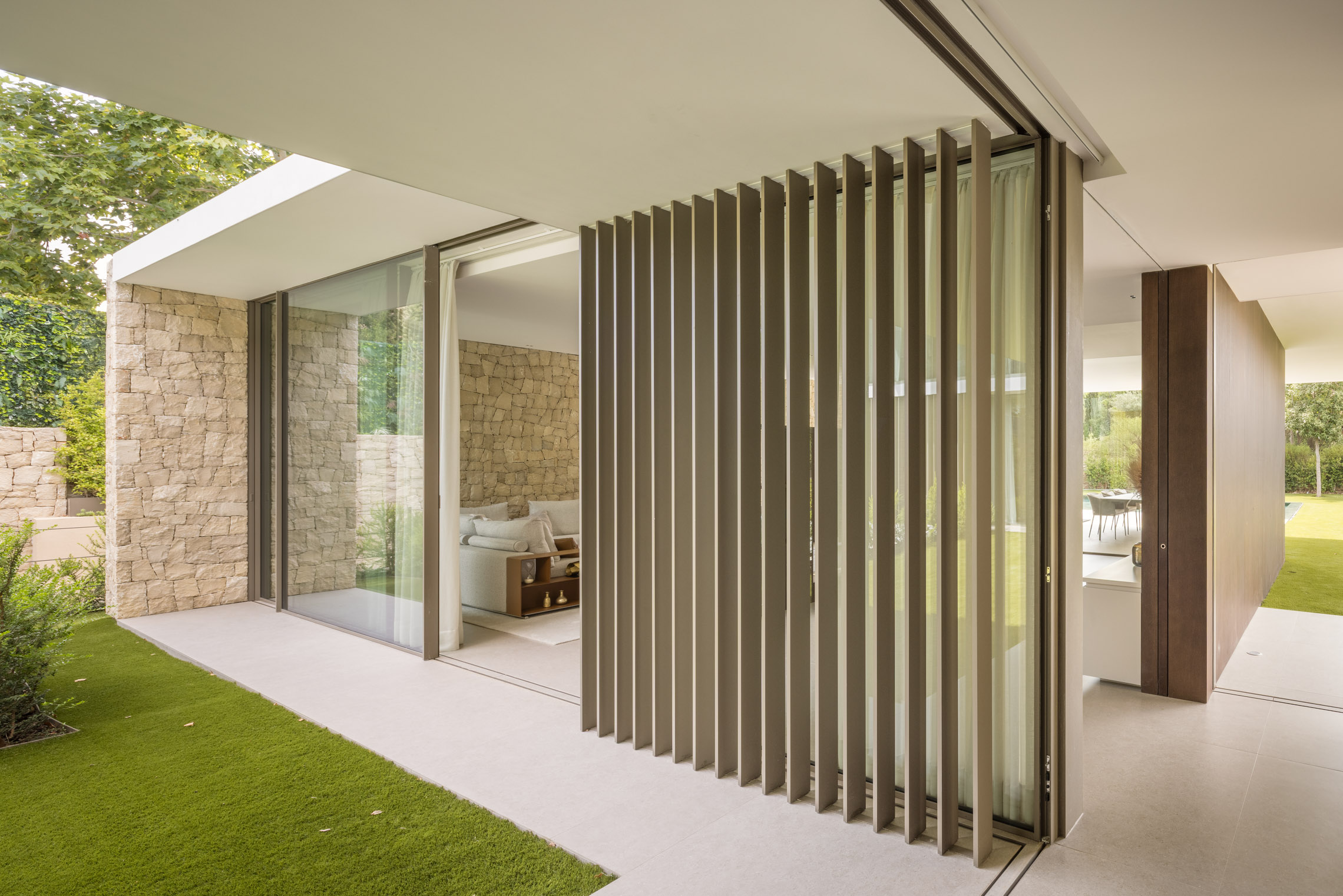
In section, the slender constructed element folds, embracing the spaces it forms with each fold in a set of solid pleated sheets that, with each rhythmic movement, rock interiors that are partly hidden and partly open, hinting at and concealing themselves, opening and closing.
COZY ATMOSPHERE
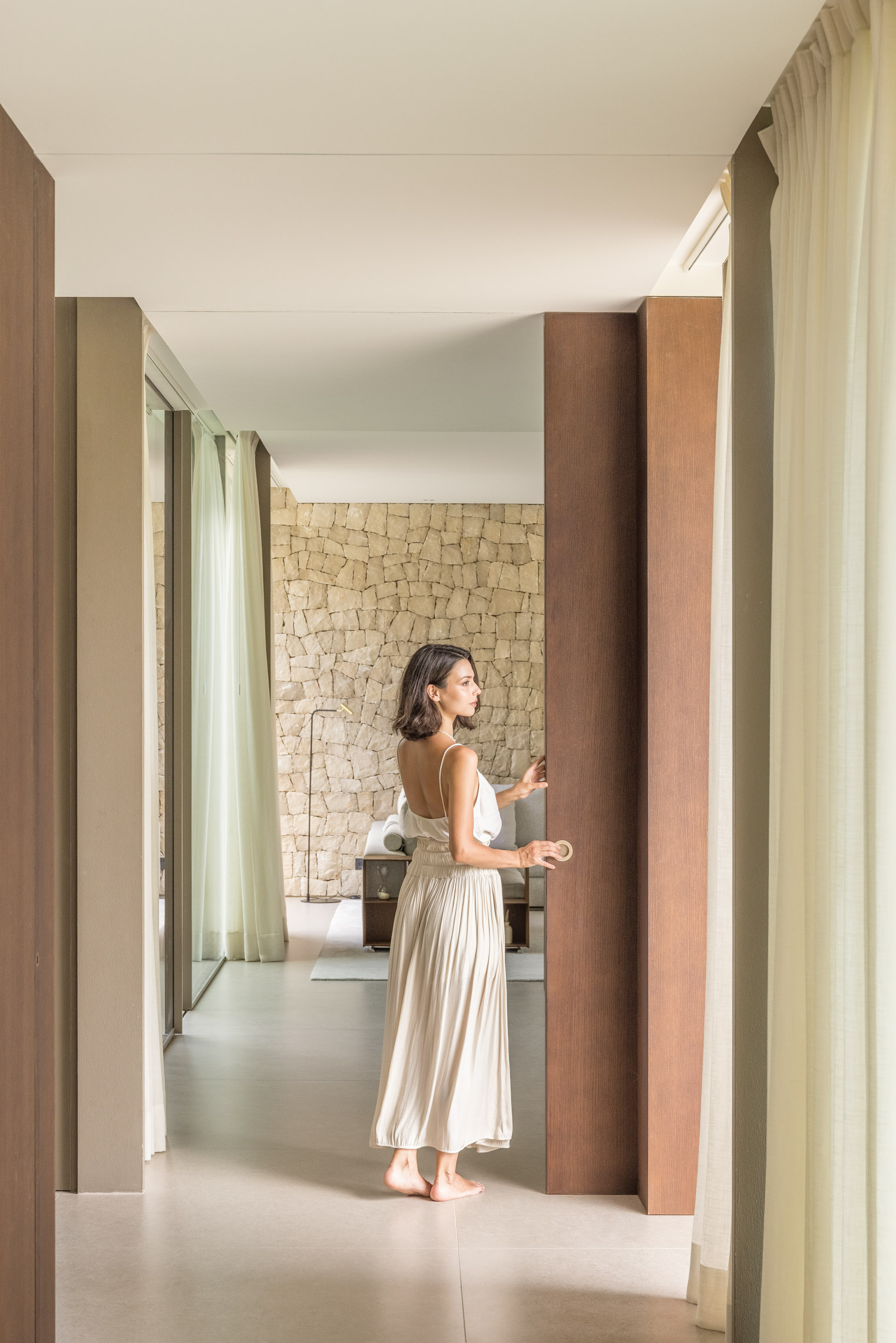
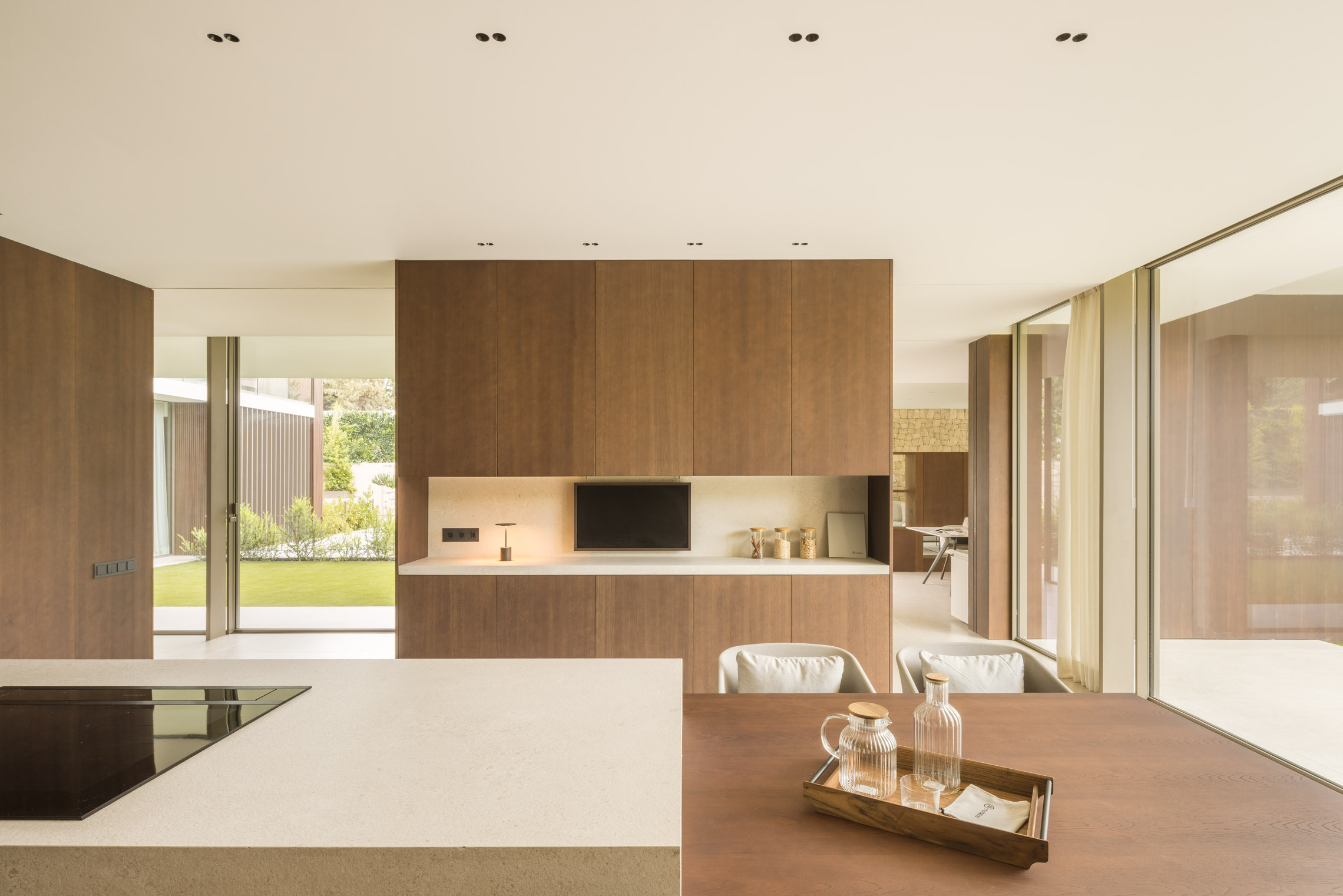
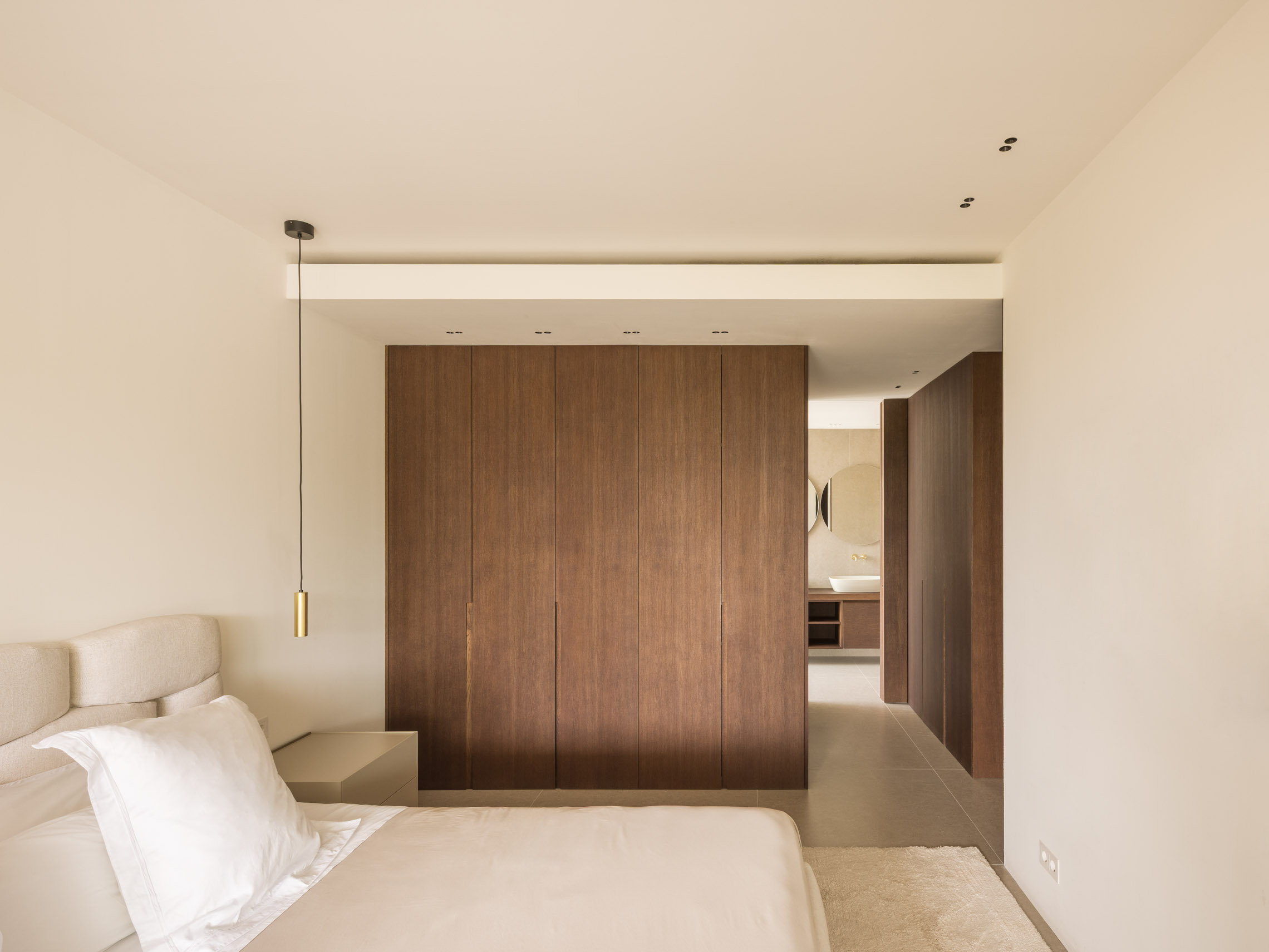
The home is conceived as a serene refuge, where the architecture dialogues with the warmth of natural materials. Wood, the protagonist in cladding and kitchen, provides a feeling of warmth and closeness, reinforcing the link with the environment. Dry masonry, used in walls and basements, expresses solidity and authenticity, evoking traditional construction techniques and an honest relationship with the material.
The sand-coloured floors unify the spaces and amplify the natural light, creating a soft and continuous atmosphere that invites you to explore the house without visual breaks. This neutral and earthy colour palette reinforces the feeling of calm and balance, allowing the architecture to be perceived as timeless.
On the upper floor, where the sleeping area is located, the main objective of the house is to control the intimacy and privacy of the rooms.
For this reason, the built structure is set back significantly from the lower floor, ensuring visual separation between the more public spaces of the house and the more private ones.
LEISURE UNDER THE RADAR
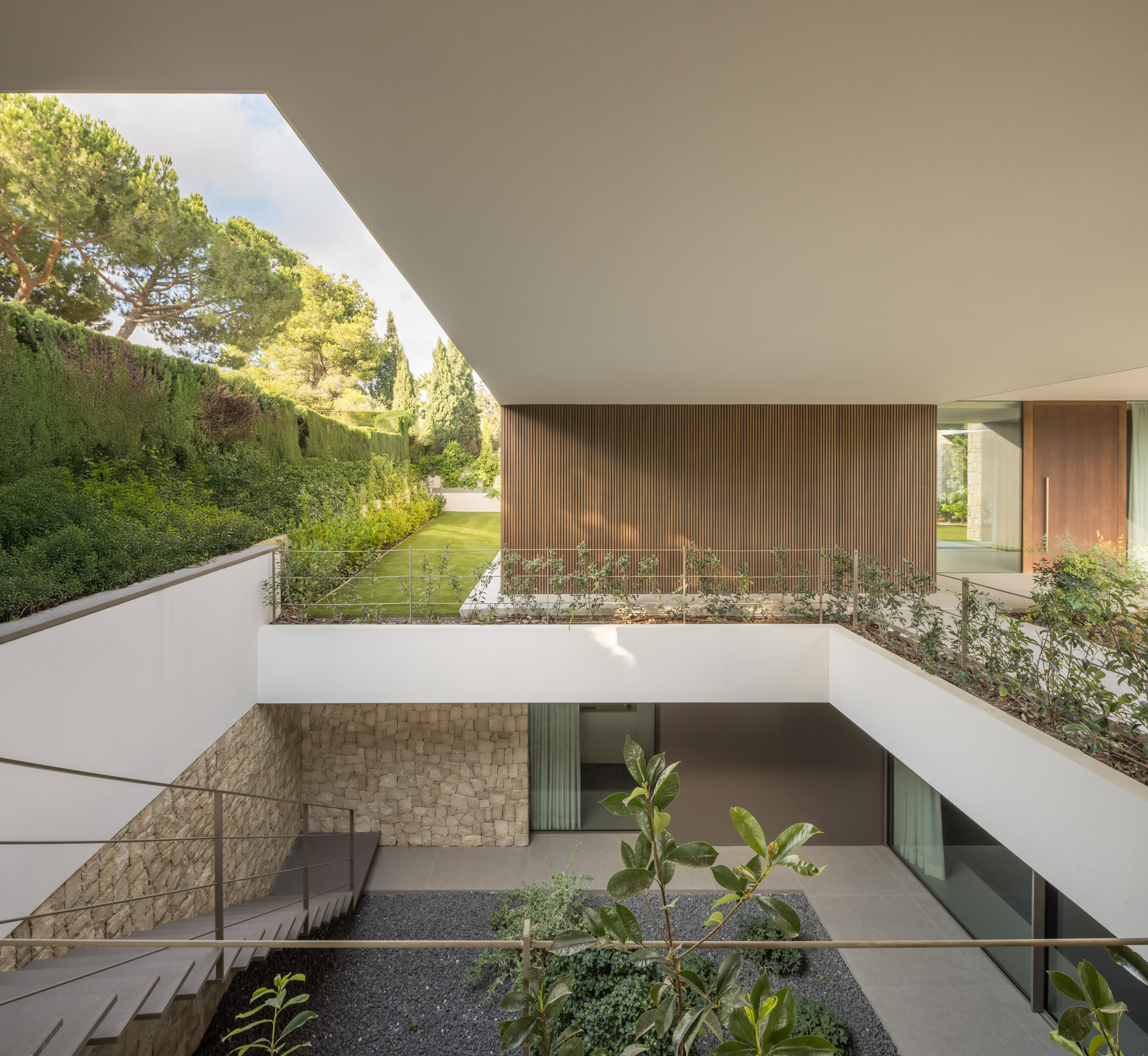
Seeking the protection of contact with the earth, the spaces dedicated to leisure and sport are sheltered in the basement. Acoustically insulated and with independent access, these rooms also enjoy their own green spaces thanks to two courtyards that descend to the basement level, providing the necessary light and ventilation.